America’s Retail Giants Are Looking for New Brands: Inside the Open Sourcing Opportunities at Walmart and Home Depot
What came out of Walmart’s 13th Open Call, and why did 54 entrepreneurs walk away with a Golden Ticket? Home Depot’s second Orange Exchange is now taking applications. Who is eligible, and when is the deadline? How can Chinese brands going global use these open sourcing channels to break into mainstream U.S. retail?
“Real voices from the US front line, for brands going global”
| In this article: What came out of Walmart’s 13th Open Call, and why did 54 entrepreneurs walk away with a Golden Ticket? Home Depot’s second Orange Exchange is now taking applications. Who is eligible, and when is the deadline? How can Chinese brands going global use these open sourcing channels to break into mainstream U.S. retail? |
|---|
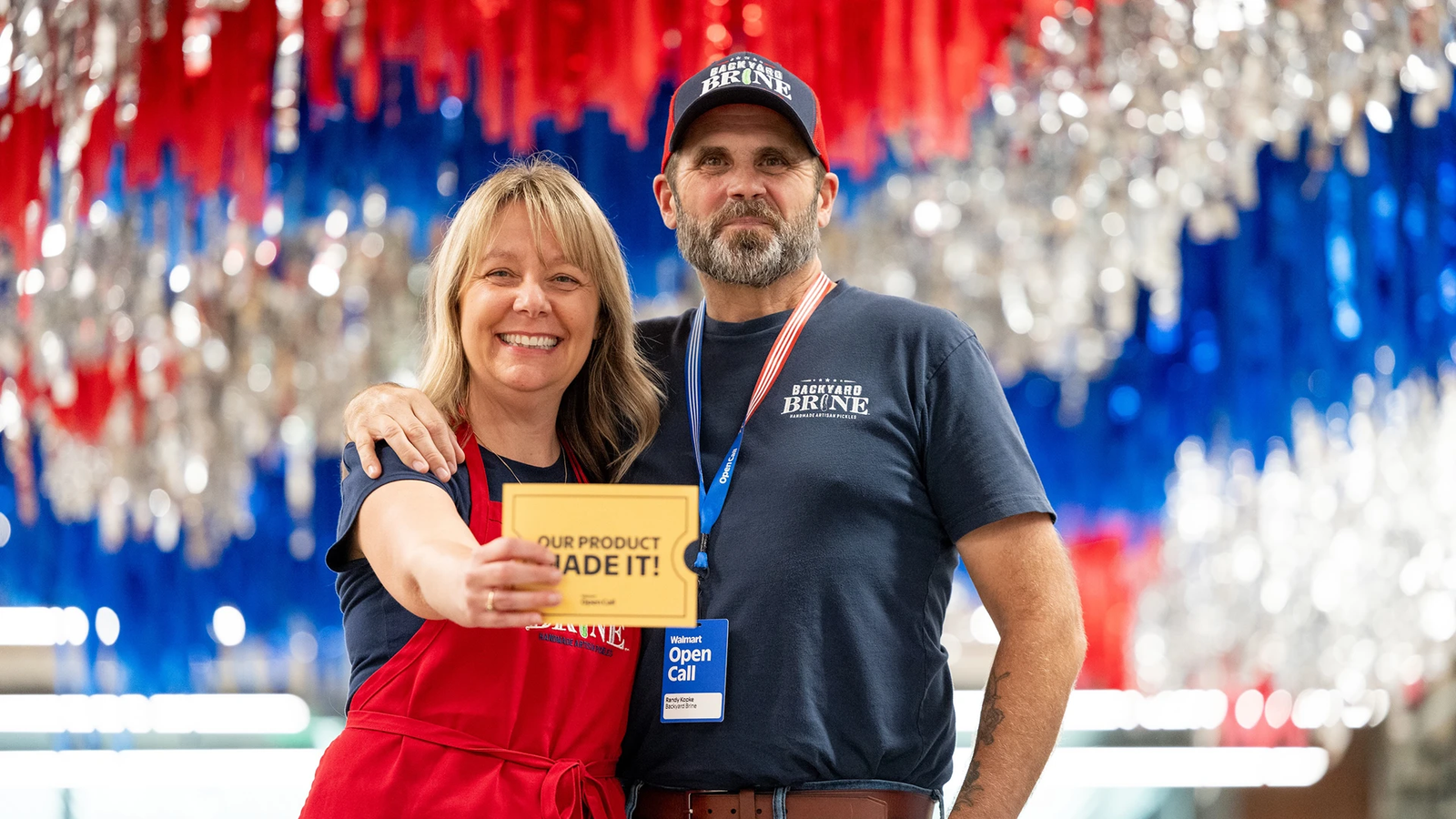
At the 13th Open Call, entrepreneurs who won a Golden Ticket hold up cards reading “OUR PRODUCT MADE IT!” Image source: Walmart corporate website
Introduction:
On October 15, Walmart announced the results of its 13th Open Call: nearly 150 American entrepreneurs were invited to take part, and 54 received a Golden Ticket, meaning their products earned a chance to get into Walmart, Sam’s Club or online sales channels.
Two days earlier, Home Depot announced the launch of its second Orange Exchange, an open call for new products from U.S. small businesses, with applications accepted through December 15.
In quick succession, two of America’s biggest retailers have sent a signal worth paying attention to: for small and mid-sized companies with innovative products and the capacity to supply them, getting into large retail channels doesn’t have to depend on traditional supplier relationships. There are also formal, open mechanisms for pitching products and connecting with buyers.
For Chinese brands expanding into the U.S. market, these mechanisms are worth understanding. One point deserves particular attention: the two programs have different eligibility requirements.
1. Nearly 150 Entrepreneurs Selected for Walmart Open Call
This year, nearly 150 entrepreneurs stood out from a pool of several thousand applicants and traveled to Bentonville from 35 states and Puerto Rico. Their products spanned home, sporting goods, pets, food, beverage, baby and personal care, and every one of them was made, grown or assembled in the U.S.
This isn’t a Walmart-only event. According to Walmart’s official FAQ, Open Call is the largest sourcing event for Walmart and Sam’s Club, and entrepreneurs can pitch directly to Walmart and/or Sam’s Club merchants.
2. From Application to Buyer Meeting: How Open Call Works
The day opened with insights from Walmart and Sam’s Club leaders across merchandising, Marketplace and eCommerce. They took turns on stage to explain how they put the customer and member at the heart of product selection and to walk through the multiple pathways for reaching customers, followed by a session focused on operational fundamentals.
Entrepreneurs moved between breakout sessions and resource booths, putting questions directly to Walmart and Sam’s Club merchandising leaders about what it takes to build, operate and scale a business at one of the world’s largest omnichannel retailers. They could learn about everything in person, from supplier finance and Supplier Academy to growth businesses such as Marketplace, Connect and Walmart Business. Seven supplier mentors worked with them throughout the day as they practiced their pitches, helping them present their products more powerfully and sharing firsthand lessons from their own entrepreneurial journeys.
The main event was the 30-minute, face-to-face pitch. Entrepreneurs sat across the table from Walmart and Sam’s Club merchants and presented their products directly.
In the end, 54 entrepreneurs received a Golden Ticket, meaning their products earned a chance to get into Walmart or Sam’s Club stores or online channels.
3. Why Walmart Holds Open Call
David Guggina, president and CEO of Walmart U.S., put it this way: “Open Call is about more than getting a product on our shelves. It’s about creating opportunities for businesses making products right here in the U.S., while bringing more choice and value to the customers we serve.”
Leah Platz, senior vice president of Merchandise Excellence at Walmart, spoke from the entrepreneurs’ point of view: “This year, we focused on bringing entrepreneurs to Bentonville who are positioned to take that next step and pairing them with the insights, resources and relationships that can help them move quickly. […] We’re excited to help these businesses build for long-term success.”
Walmart’s support for domestic sourcing goes back decades. In 1985, Sam Walton launched the “Buy American” initiative; in 2014, the first Open Call was held in Bentonville; in 2021, Walmart committed to investing an additional $350 billion over 10 years in products made, grown or assembled in the U.S. (an investment estimated to support more than 750,000 U.S. jobs); and in 2026, Open Call reached its 13th edition. As of FY26, more than two-thirds of Walmart’s annual product spend goes to such goods.
For a small brand with no established channels and no middlemen, Open Call is an open, fair door: the product alone can earn it a seat across from a top retailer’s buyers.
4. Home Depot: A Real Opportunity for Small Suppliers
Likewise, Home Depot is opening its doors to small businesses in its own way. In February 2026, the company hosted the first Orange Exchange (the name is a nod to orange, Home Depot’s logo and signature color). Then, on October 14, it announced the second edition in a press release titled “The Home Depot Continues Its Connections With U.S. Small Business Suppliers.”
The event connects U.S. small business suppliers with Home Depot merchants and business leaders. Every one-on-one pitch session features live demos and real-time feedback, so suppliers can put their products on the table and hear candid opinions from buyers in person. Home Depot hopes to use the event to drive collaboration and turn emerging vendor growth into real value that customers and associates can feel.
“Partnering with innovative U.S. small businesses allows us to bring innovation and quality products to our customers while supporting entrepreneurship and growth,” said Candace Rodriguez, Senior Director of Sustainability and Supplier Pipeline. Suppliers will be assessed on market readiness, production capacity and fulfillment capabilities, and innovation will also be evaluated. For well-prepared small suppliers, this is a significant opportunity.
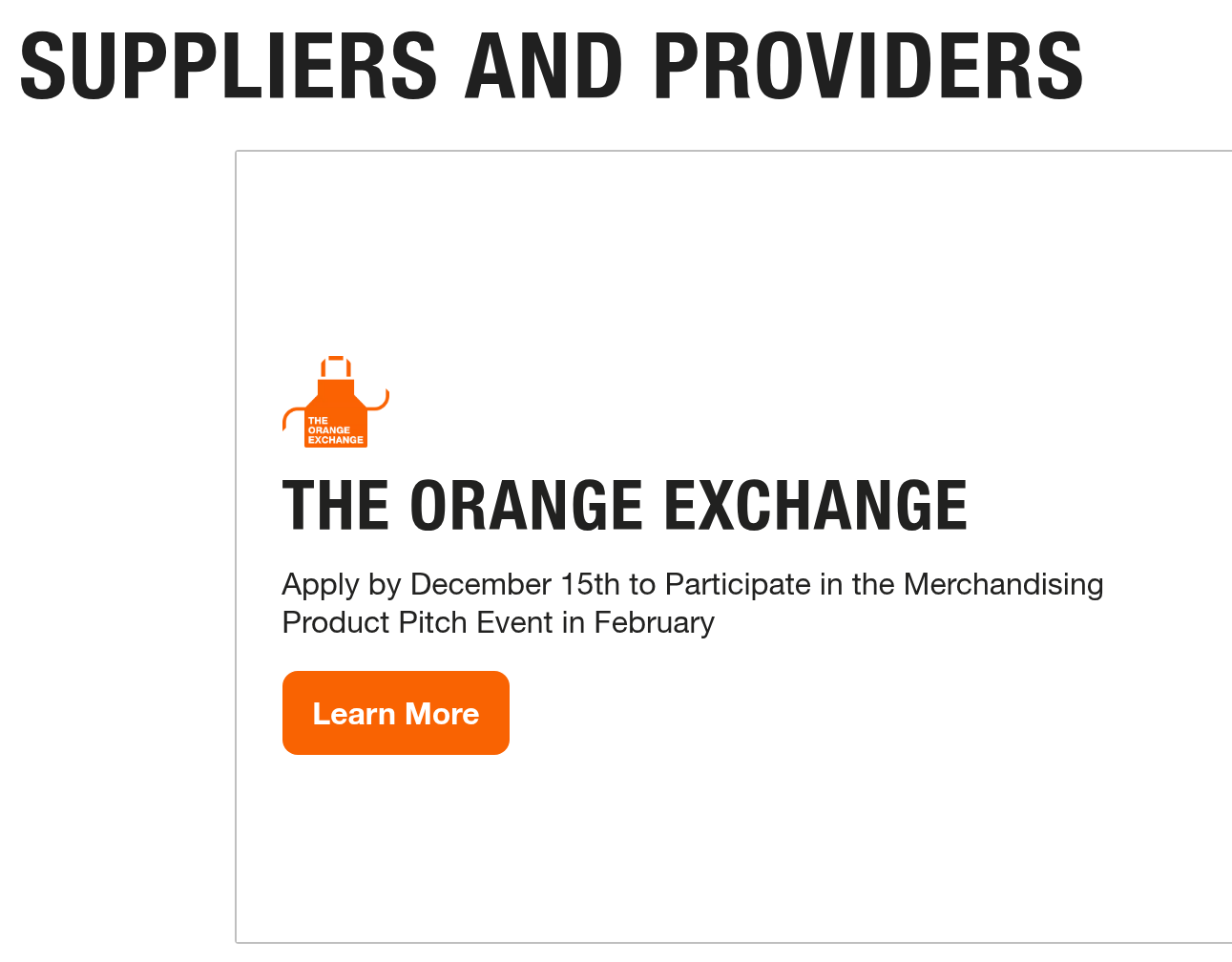
Screenshot of The Orange Exchange entry point on Home Depot’s “Suppliers and Providers” page. Source: homedepot.com, accessed October 15, 2026.
5. What This Means for Brands Going Global
From the standpoint of brands expanding overseas, the signal from both events is clear: major U.S. retailers are actively looking for new products and are willing to give small businesses a chance to present in person.
First, open sourcing channels are giving small and mid-sized brands direct access to large retailers.
For Chinese brands without connections in U.S. retail, this matters a great deal.
Traditionally, brands might rely on distributors, sales agents or industry relationships to reach U.S. retailers.
Open Call and Orange Exchange offer another route: submit product information according to published requirements and, once screened in, speak directly with the buying team.
This doesn’t mean traditional channels can be replaced, but it does give brands more options for entering the market.
Second, localizing in the U.S. affects more than cost. It can directly determine channel access.
The Walmart Open Call requirement that products be made, grown or assembled in the U.S. is a prime example.
For Chinese brands already considering U.S. manufacturing, OEM or contract production, retail channel eligibility belongs in the strategic assessment alongside tariffs, logistics and lead times.
Note that Walmart Open Call explicitly requires products to be made, grown or assembled in the U.S., while Home Depot Orange Exchange is aimed mainly at small and mid-sized businesses operating in the U.S. The two programs’ eligibility requirements are not quite the same.
Third, commercial readiness is the prerequisite for entering mainstream retail.
Home Depot spells out three key evaluation criteria:
Market readiness, production capacity and fulfillment capabilities. In other words: Is the product ready for the U.S. market? Can the company reliably supply enough of it? Can it fulfill, ship and deliver orders to the retailer’s requirements?
Brand stories matter, but for large U.S. retailers, product competitiveness, consumer demand and supply chain fulfillment capability matter just as much.
6. How to Apply
Walmart Open Call:
This year’s application window has closed. To learn about the next edition, follow Walmart’s official Open Call page and read the official FAQ. Links below:
Open Call page: https://corporate.walmart.com/suppliers/investing-in-american-jobs/events/annual-open-call
Home Depot Orange Exchange:
The event will be held on February 18, 2027, in Atlanta, and is seeking products with market potential from U.S.-based small and mid-sized businesses.
The application deadline is December 15, 2026.
Interested companies can apply through Home Depot’s official portal at https://www.homedepot.com/c/suppliers_and_providers. When applying, go to the Merchandising Supplier application and select Yes under the “2027 Small Business Orange Exchange” option.
According to the official FAQ, each application can include up to five products, and applications cannot be edited once submitted.
Home Depot expects to notify selected companies by December 18. Selected companies must attend the event in person to meet with merchants and business leaders.
Whether a product ultimately makes it into Home Depot’s sales channels depends on further evaluation.
For full requirements, see The Orange Exchange official FAQ (https://dam.thdstatic.com/content/production/VYp-hdO0NQhslLL6zF0yaA/hzyZfSiHL4dmsi5Gl0DfrA/Original%20file/OrangeEx-FAQ2027.pdf).
Note: WeCross.US confirmed the information above on October 16, 2026 (U.S. Eastern Time). If anything changes, the two companies’ official announcements take precedence.
This document is a compilation of market information and does not constitute investment or legal advice.