Temu's Lawsuits Wave in U.S. and What Cross-Border Brand Sellers Must Face
Temu, the overseas business of Pinduoduo, signed an agreed judgment in Texas and was sued again in Missouri in the same week, bringing the number of states that have sued it to eight. The Texas judgment writes in terms on data storage, annual audits, product testing and store shutdowns, and its "most-favored state" clause sets a floor for future settlements. Much of the states' evidence comes from product listings. This piece sorts the issues into five categories and lays out six things brand sellers should do now.
In-Depth Analysis | WeCross.US Analyst | 2026-10-22

Figure 1. International parcels awaiting inspection at the U.S. Customs and Border Protection (CBP) JFK International Mail Facility in New York (file photo taken in 2014; not related to any specific platform). Photo: U.S. Customs and Border Protection, Wikimedia Commons, public domain
1. Two Legal Filings in One Week
Temu's legal team has likely had a busy week.
On October 16, Texas Attorney General Ken Paxton announced a settlement with Temu. The public document is an Agreed Final Judgment and Permanent Injunction. The defendants are PDD Holdings and Whaleco Inc., and the case is in the 471st District Court of Collin County, Cause No. 471-01114-2026. Temu is the overseas business of PDD Holdings (formerly Pinduoduo Inc.), the parent company of Pinduoduo, and launched in the U.S. in September 2022. PDD Holdings is a Cayman Islands holding company; Temu is operated by its subsidiaries, and the U.S. operating entity is Whaleco Inc.
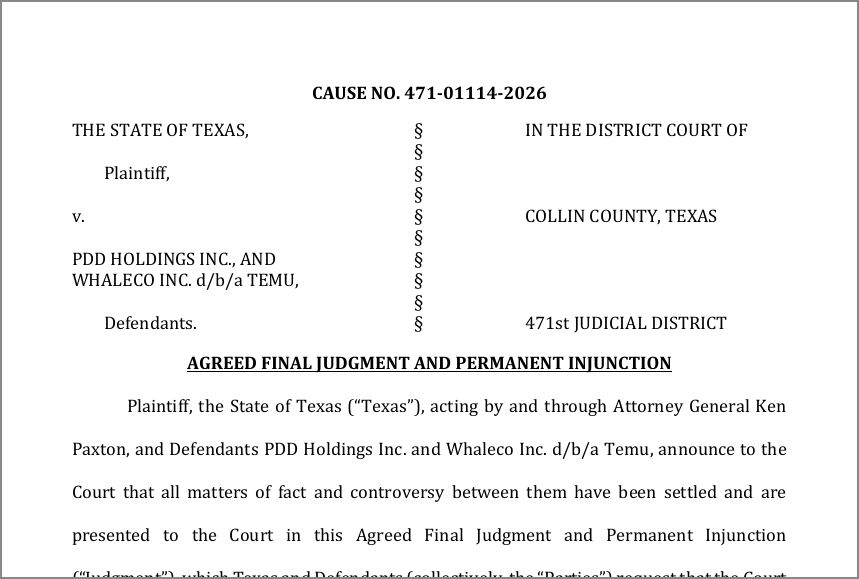
Figure 2. First page of the Texas Agreed Final Judgment (source: Office of the Texas Attorney General)
The judgment's core terms fall into five groups:
1. Money: Temu pays Texas $3 million in civil penalties, attorneys' fees and investigative costs, due within 30 days of the effective date.
2. Data: Texas users' personal data must be stored on commercial servers in the United States that are owned and controlled by a U.S. company, and access by individuals and entities in China is restricted, except for "essential business functions."
3. Audits: A qualified independent firm conducts an annual third-party audit of app and data security. Each audit finding of "material noncompliance" carries an $8 million penalty, with 60 days to cure.
4. Products: Products commonly bought by Texas consumers are tested each year for lead, PFAS, phthalates, formaldehyde and heavy metals. Products that exceed standards must be delisted within 2 business days, all stores under the same seller must be closed within 5 business days, and Texas buyers must be notified and fully refunded.
5. Term and nature: The judgment runs for 4 years. The defendants deny all allegations of wrongdoing, and the settlement is not an admission of liability. A Temu spokesperson said the agreement "involves no admission of wrongdoing and is in the best interests of all parties."
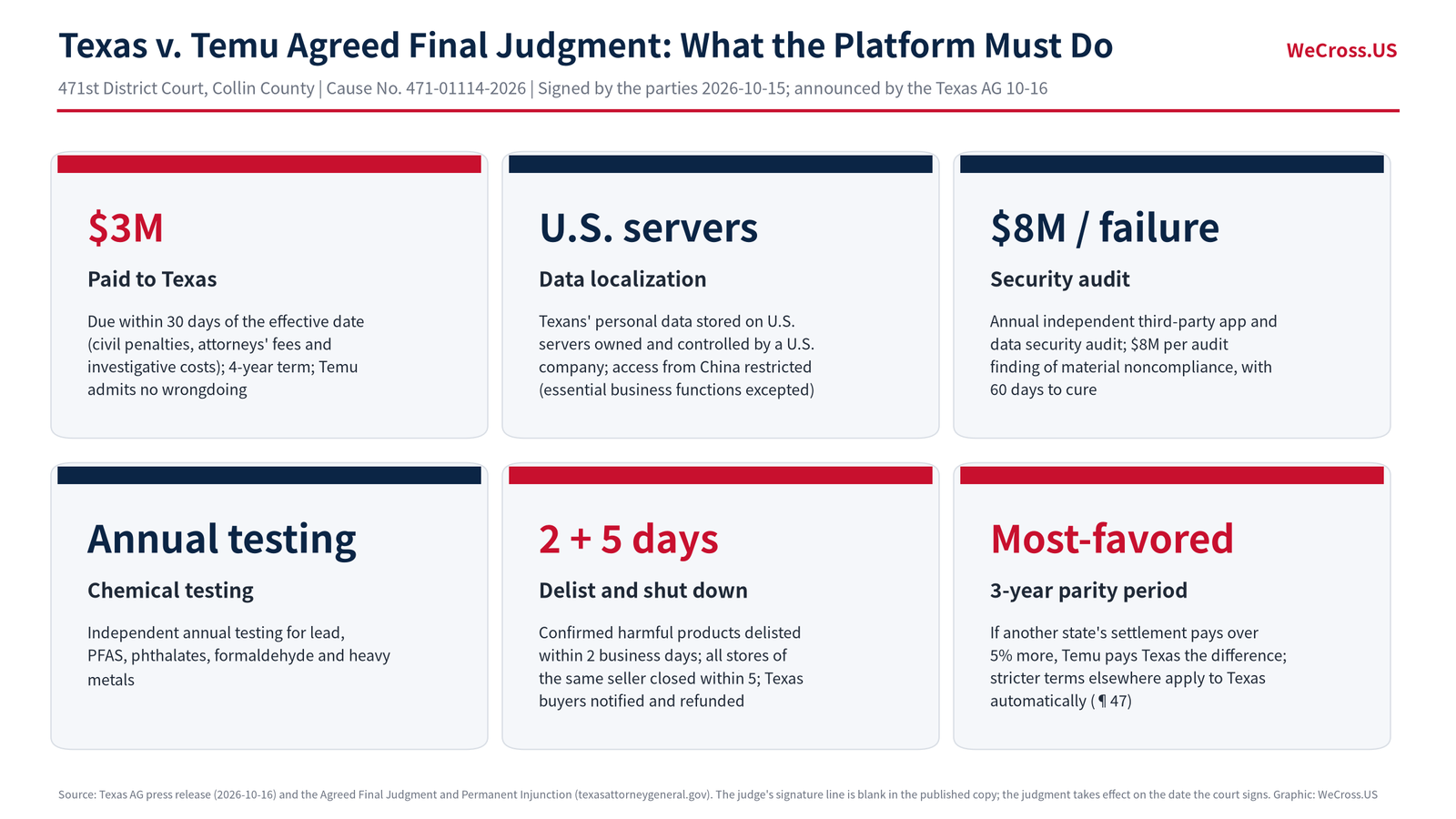
Figure 3. Key terms of the Texas judgment (WeCross.US graphic based on the judgment text)
Just three days earlier, on October 13, Missouri Attorney General Catherine Hanaway sued PDD Holdings, Whaleco and Temu Payments in Cole County Circuit Court under the Missouri Merchandising Practices Act. Half of the petition is about data; the other half is about deceptive business practices.
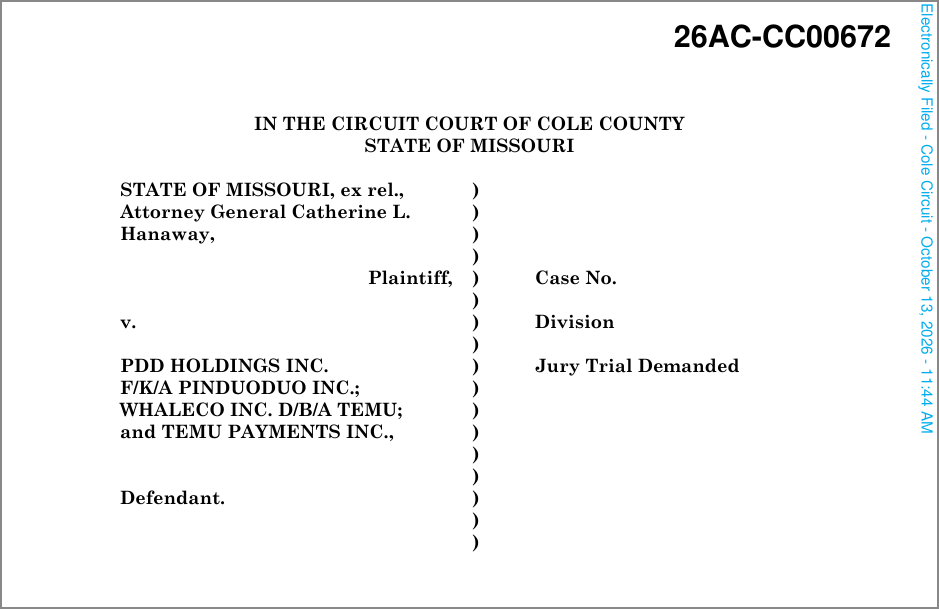
Figure 4. First page of the Missouri petition (source: petition PDF)
2. Looking Back: Five Categories of Issues in the Complaints, All Landing on Product Listings
Between June 2024 and October 2026, eight states sued Temu: Arkansas, Nebraska, Kentucky, Arizona, Texas, Oklahoma, Iowa and Missouri. Each relies on its own consumer protection law, and each frames and emphasizes the case differently; Arkansas substantially rewrote its complaint in 2025.
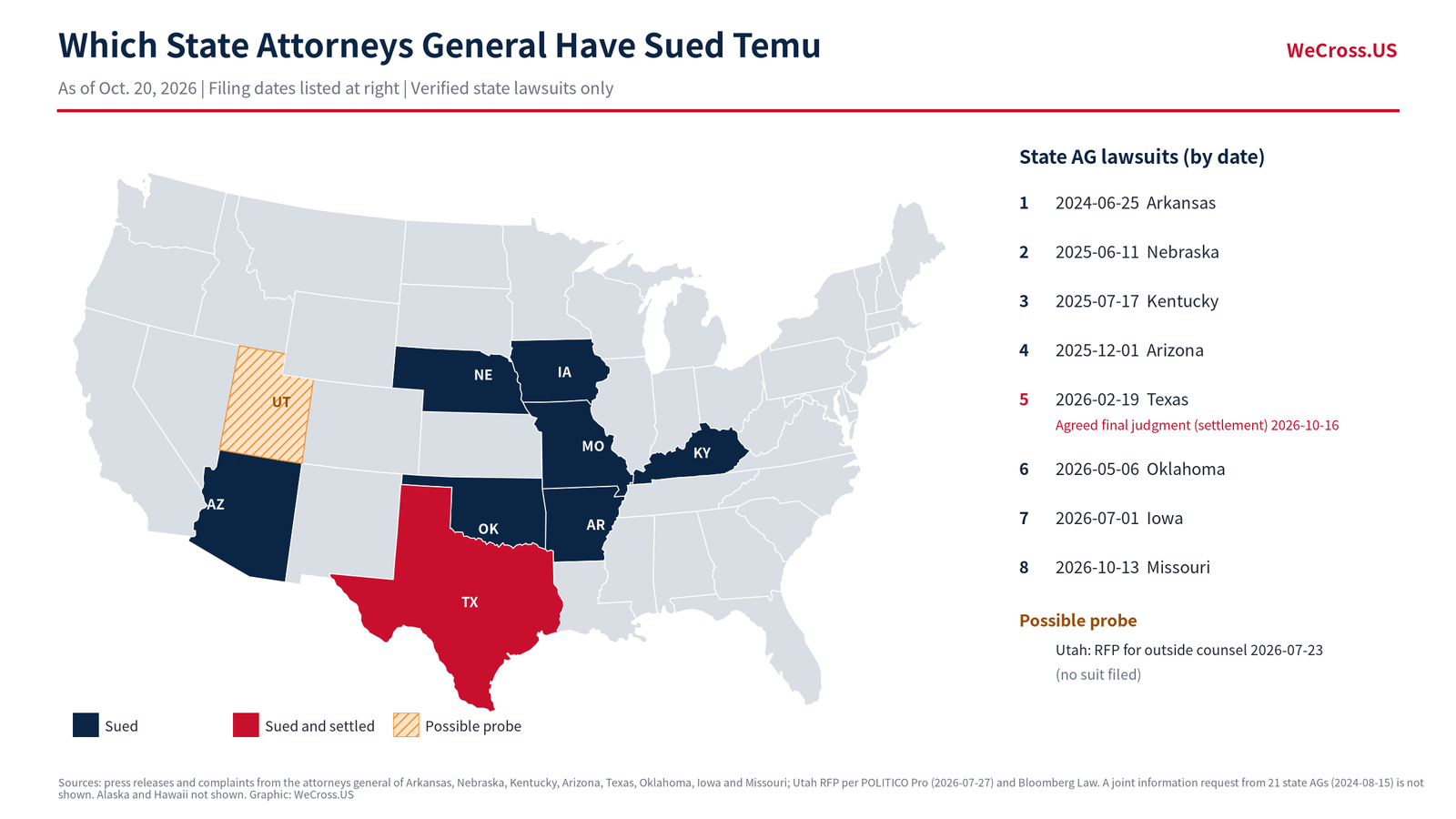
Figure 5. States that have sued Temu (as of Oct. 20, 2026; WeCross.US graphic based on state AG announcements)
The defendant is the platform, but much of the evidence comes from individual product listings, strikethrough prices and reviews. Read from a seller's point of view, the issues fall into five categories, and each maps to something sellers can act on.
1. Brand authorization: every state starts by searching its own names
Nearly every state put suspected unlicensed merchandise from its own sports teams, universities and heritage brands into its complaint, from Nebraska's Cornhuskers to Kentucky's Buffalo Trace to Missouri's Chiefs and Budweiser. This is the cheapest evidence to gather, since a few screenshots of listings will do, and it is the easiest to win support for at home. Open Temu in Atlanta and you will also find unbranded items printed with the city name in colors close to the local team's (Figure 6).
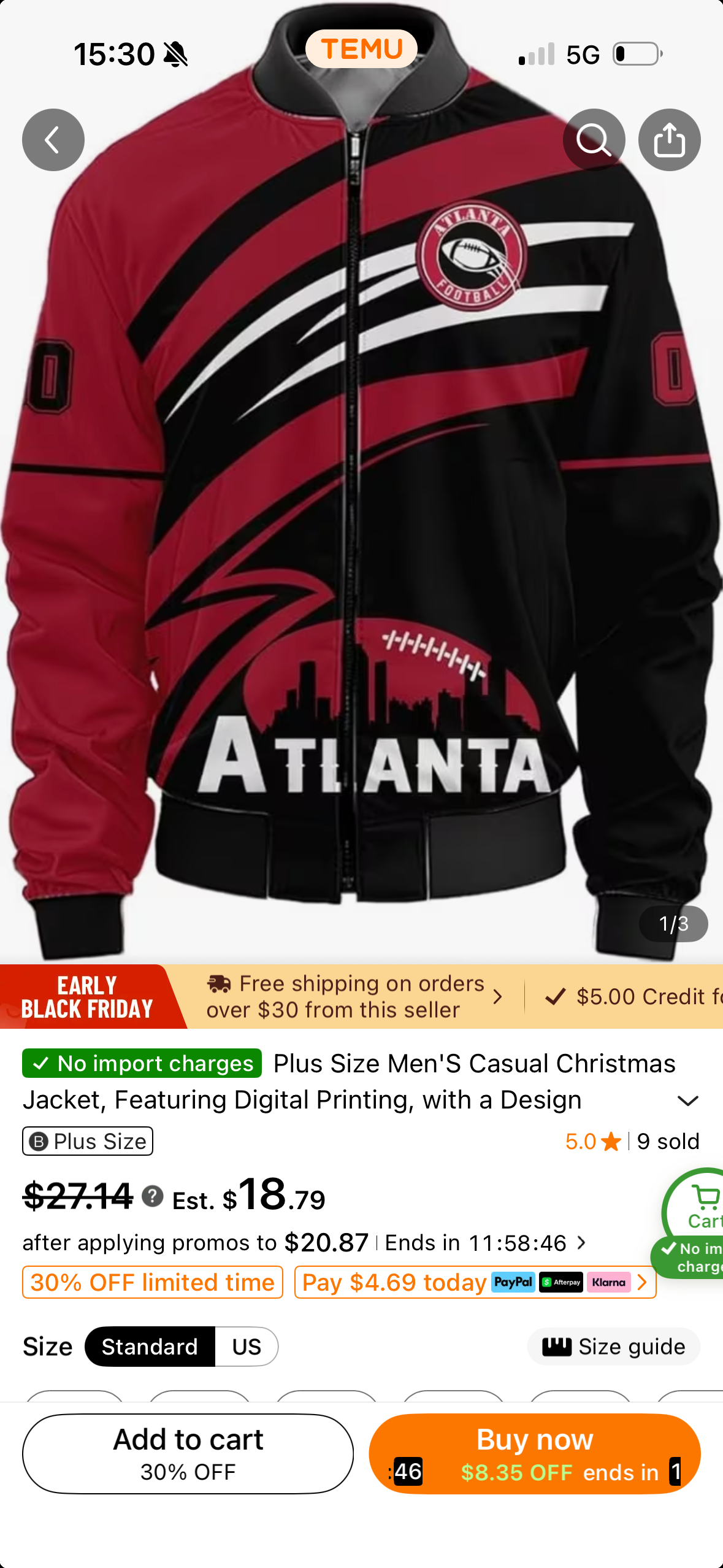
Figure 6. Temu listing: a red-and-black jacket printed with "ATLANTA" and a football graphic, with no brand shown on the page, an item that uses the team's home city name and similar colors; strikethrough price $27.14, estimated price $18.79, labeled No import charges, 30% OFF limited time and Early Black Friday. Screenshot of the Temu app taken by the author in Atlanta on Oct. 20, 2026
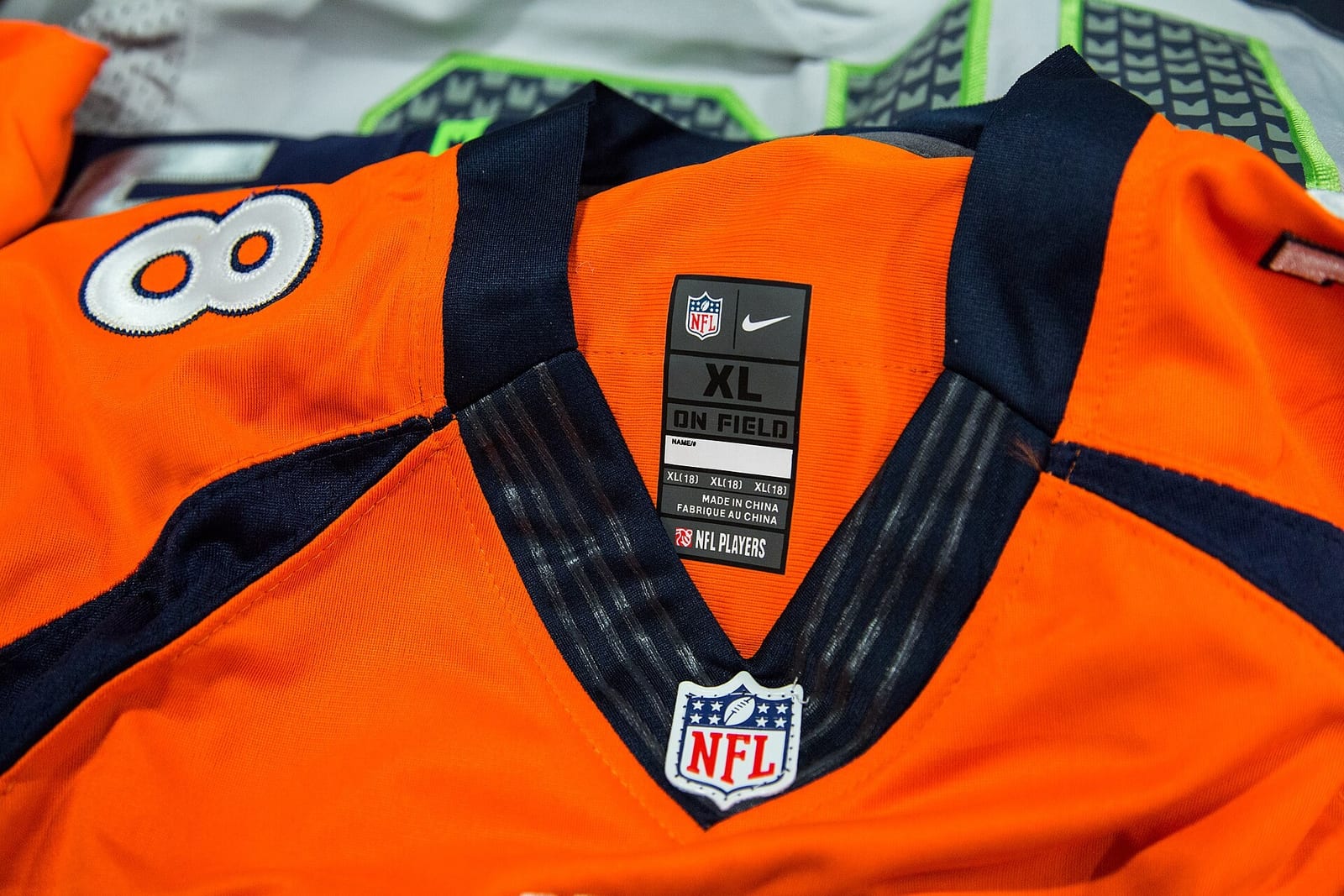
Figure 7. Counterfeit NFL jerseys seized by U.S. Customs and Border Protection (CBP) at the JFK International Mail Facility in New York. Photo: CBP, Wikimedia Commons, public domain
2. Product safety: from "poor quality" to a testing checklist
When the early complaints discussed products, they mostly meant items that did not match their descriptions. Product safety became concrete first at the federal level: in 2026, the U.S. Consumer Product Safety Commission (CPSC) announced recalls of helmets and of toys containing button batteries sold by third-party sellers on Temu. The Texas judgment then turned it into obligations: the platform tests for five classes of harmful substances every year, and for imported products subject to mandatory CPSC safety rules, sellers must submit compliance certificates and test results before listing, from an independent lab accepted by the CPSC or accredited to ISO/IEC 17025.
3. Pricing, reviews and promotions: the prices sellers post are evidence too
The state's allegations addressed by the Texas judgment include the terms and value of promotions, credits, coupons, games and referral rewards; whether reference and strikethrough prices are genuine; and the use of reviews and ratings to mislead consumers about quality. Other states' complaints cite made-up "market prices," reviews the platform paid for, and spin-the-wheel games. The platform designs the rules, but the strikethrough prices and reviews sit on the seller's page.
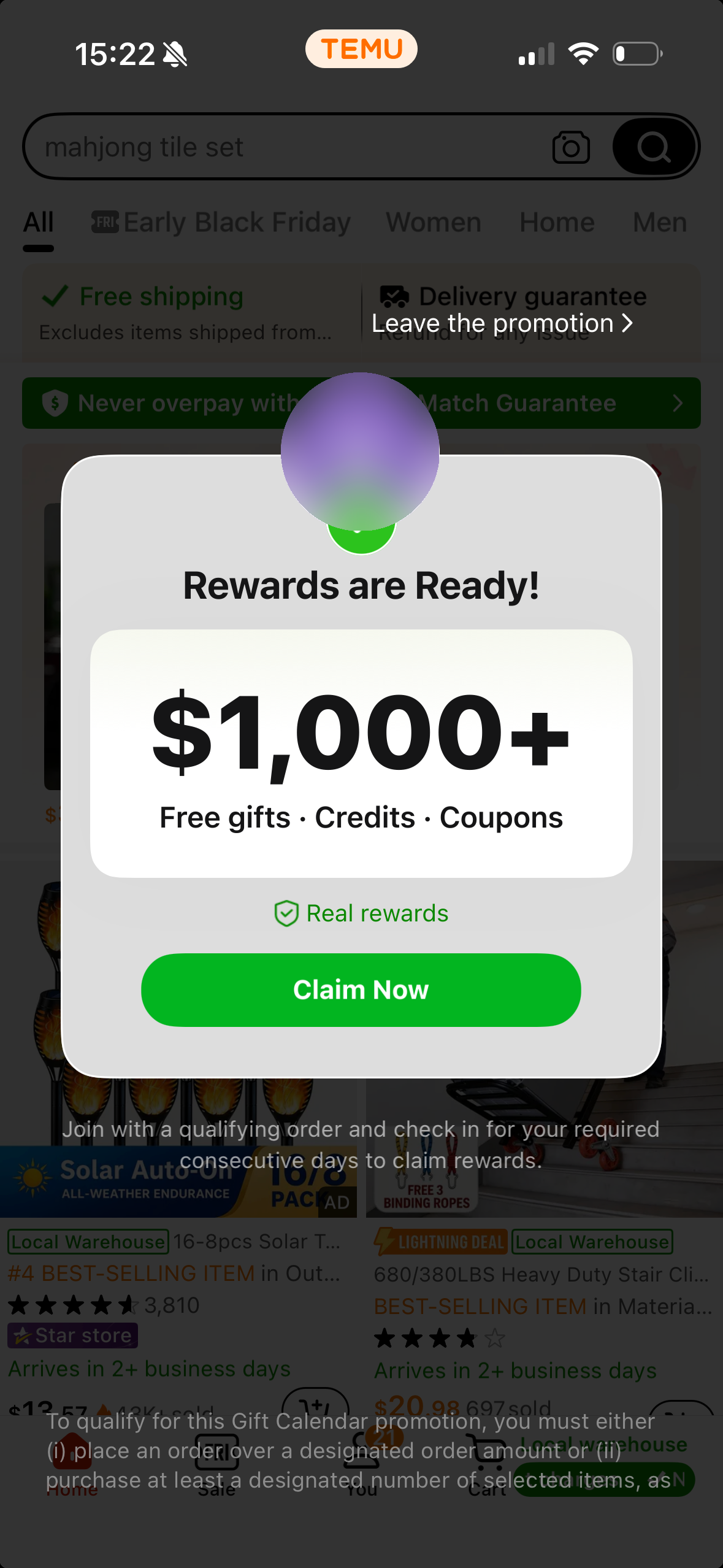
Figure 8. Temu app pop-up: "$1,000+ Rewards are Ready!" listing Free gifts, Credits and Coupons; fine print at the bottom says rewards require reaching a set order amount or item count and checking in for a number of consecutive days (Gift Calendar promotion). Screenshot of the Temu app taken by the author in Atlanta on Oct. 20, 2026
4. Seller identity and the "Local" label: enforcement shifts to sellers
Starting May 2, 2025, parcels from China lost de minimis treatment, the duty exemption for shipments under $800; on August 29, the exemption ended for all countries. Temu's U.S. orders shifted further toward local warehouses and local sellers. In September 2025, the Federal Trade Commission (FTC) and the Department of Justice (DOJ) settled with Temu under the INFORM Consumers Act for a $2 million penalty; the law requires platforms to verify and disclose information about high-volume third-party sellers. Nebraska's complaint challenges the "Local" label: consumers assume the goods are local, but they may come from overseas and simply be stored temporarily in a U.S. warehouse. Search Temu for Atlanta Falcons today, and most results carry a "Local Warehouse" label (Figure 9).
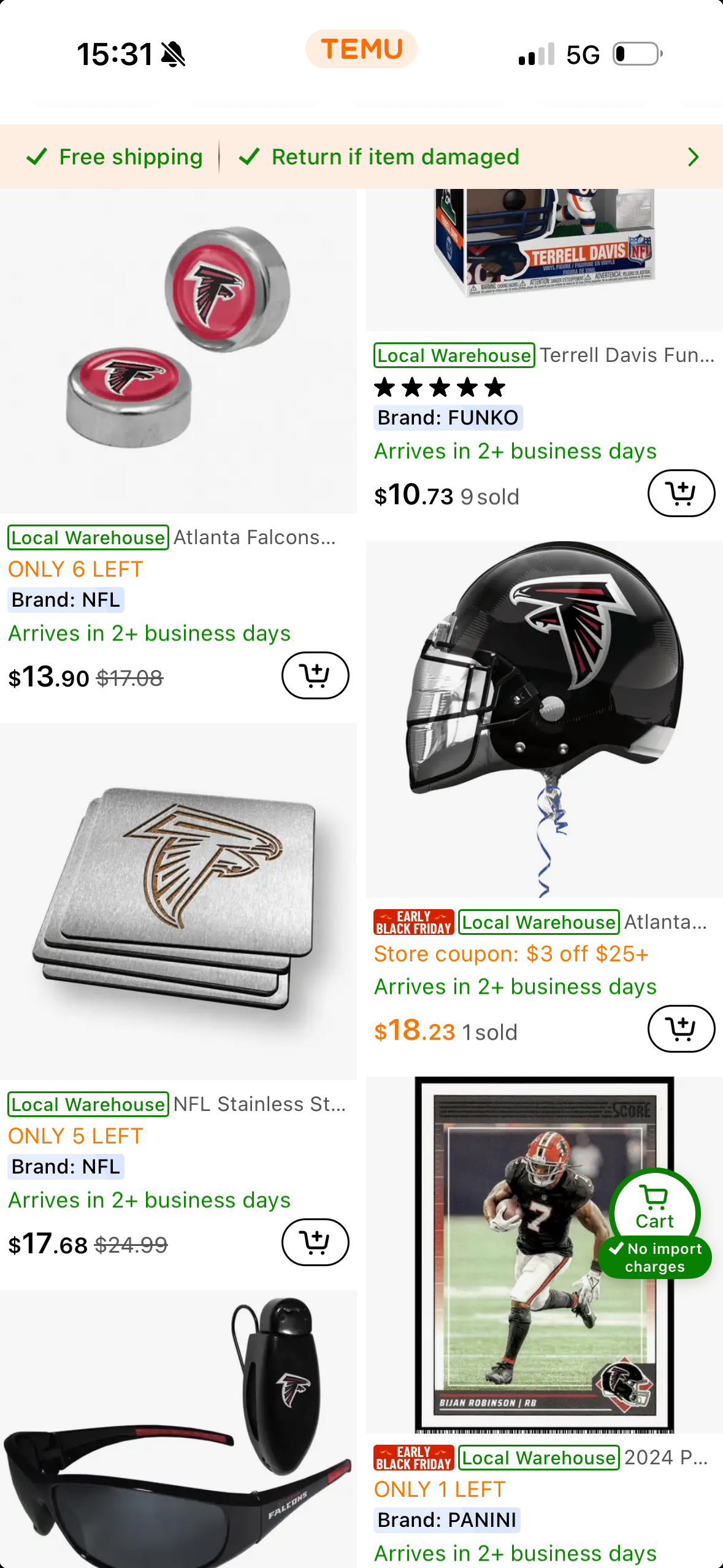
Figure 9. Temu search results for "Atlanta Falcons": most items carry the Local Warehouse label and "Arrives in 2+ business days," and some pages are marked as branded goods (Brand: NFL, Brand: FUNKO, Brand: PANINI). Screenshot of the Temu app taken by the author in Atlanta on Oct. 20, 2026
5. Data and the app: the platform's core problem, and an issue for sellers' own apps and websites
This is the common core of all eight complaints: what data the app collects, and whether users are told that a foreign government may access it. The Texas judgment's answer is to store data in the United States, restrict access by people and entities in China, audit annually through a third party, and require the privacy notice to reference Texas law and disclose the categories of data that may be shared with third parties abroad. This category falls mainly on the platform, but sellers' own apps and websites are subject to state privacy laws as well.
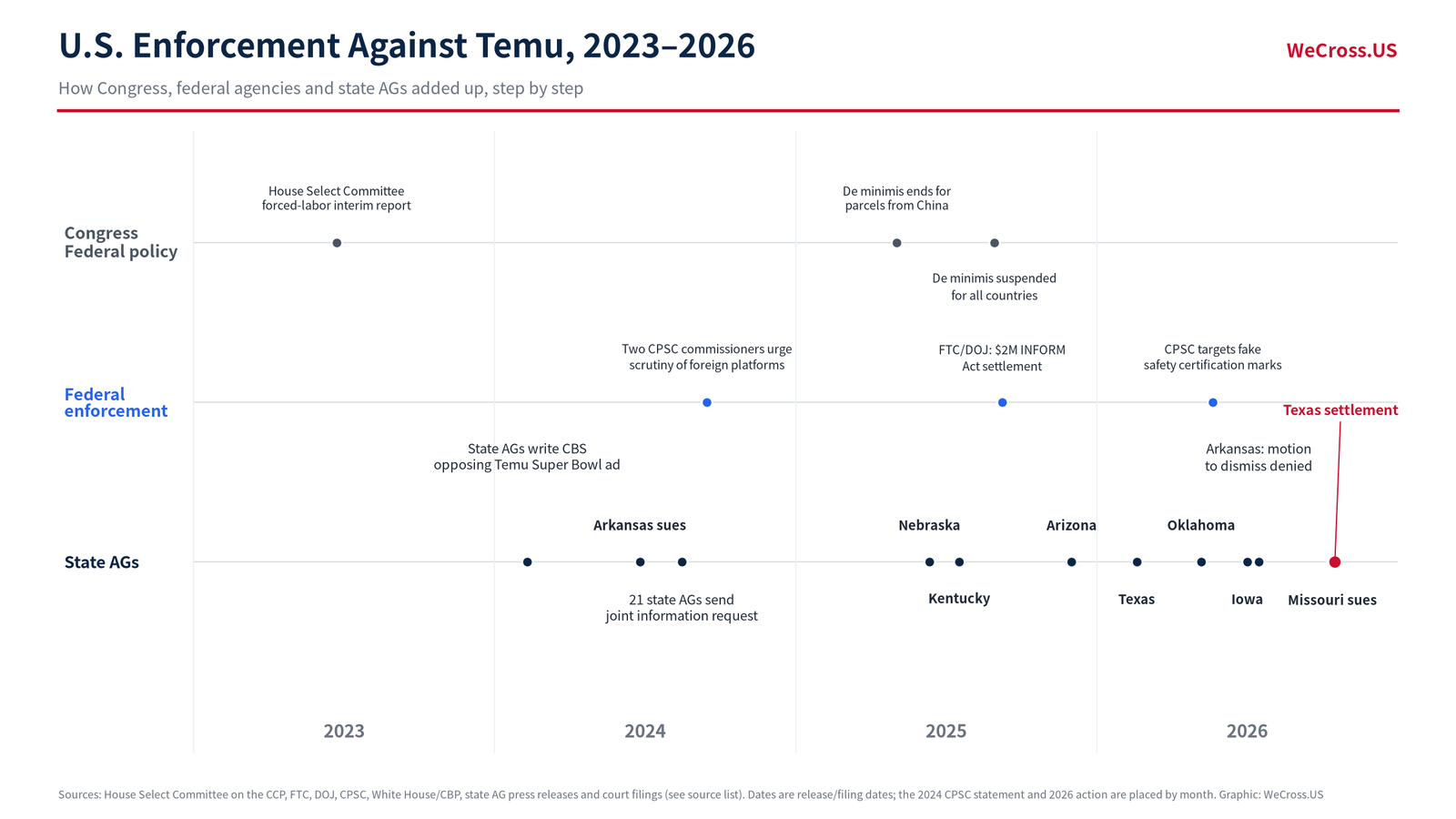
Figure 10. Timeline of enforcement actions against Temu, 2023–2026 (WeCross.US graphic based on public documents)
3. Taking Stock: Who Bears Each of the Five Issues
1. Brand authorization: falls directly on sellers. The evidence is the seller's listing; the consequences are delisting and store closure, and rights holders can pursue claims separately.
2. Product safety: shared by the platform and sellers, with most of the cost on sellers. The platform handles testing, delisting and store closures; sellers must have compliance certificates and test reports ready before listing.
3. Pricing, reviews and promotions: a shared problem. The platform designs the promotion rules, while strikethrough prices and reviews sit on the seller's page.
4. Seller identity and the "Local" label: falls on sellers. The platform verifies and discloses, but sellers supply the information, and if a label is misleading, the problem is the seller's.
5. Data and the app: borne mainly by the platform. But as the saying goes, the wool comes off the sheep's back: sellers end up paying for it.
4. Temu's Position, and the "Tightening Crown" Texas Left Behind
(1) What Temu says, and how the court sees it
1. Temu has consistently denied the states' allegations, calling them "baseless" and largely drawn from misinformation circulating online. Its position is that it collects data in line with its disclosed privacy policy and industry standards, that U.S. user data is stored in the United States, and that it has "never shared any user data with the Chinese government." It also notes that its app has passed third-party security certification, that it closed more than 16,000 stores for repeat infringement in the past year, and that it invested about $100 million in global compliance, product safety and quality control in 2025.
2. These arguments have not yet gotten Temu out of court. In July 2026, an Arkansas court denied Temu's motion to dismiss, finding that the state's allegations that Temu "collects sensitive data without disclosing that a foreign government may access it" were sufficient for the case to proceed. That is a pleading-stage ruling; the court made no findings of fact.
(2) The most-favored-state clause: a "tightening crown"
1. Paragraph 47 of the Texas judgment is titled "most-favored protection." For 3 years after the judgment takes effect, if Temu reaches a settlement with another state over substantially the same conduct, whether a settlement agreement, an assurance of voluntary compliance or a consent judgment, and that state's net payment exceeds Texas's by more than 5%, Temu must pay Texas the difference within 60 days. If that settlement's injunctive, compliance, reporting or monitoring terms are materially more favorable to the state, those terms automatically apply to Texas unless the Texas Attorney General objects within 90 days.
2. It works like the tightening crown from Journey to the West, the band that clamps down whenever its wearer strays. Whenever Temu negotiates a heavier settlement with any state, Texas automatically catches up. For other states, the Texas terms become the starting point for negotiations, not the ceiling; for Temu, every extra concession elsewhere has to be made again in Texas. Texas has thus set a precedent that is very unfavorable to Temu.
3. The crown has limits. It does not cover judgments entered after trial or contested litigation, settlements reached after Temu loses a dispositive ruling, or resolutions with federal agencies, local governments or private parties. So Temu broadly has two paths: settle on Texas's terms, or, as in Arkansas, keep litigating.
5. For Cross-Border Brand Sellers: Six Things to Do Now
1. Secure the authorization chain first. The first step in each state's evidence-gathering is searching its own names: Kentucky's complaint lists counterfeit Buffalo Trace, Louisville Slugger and University of Kentucky goods; Missouri names the Chiefs, Cardinals and Budweiser; Nebraska searched for the Huskers. Do not list items that use U.S. team, university or city names in similar colors without written authorization. When your own brand is copied, use the platform's complaint channel: the Texas judgment requires Temu to set up a dedicated team and email for rights holders.
2. Have test reports in hand before listing. The CPSC has already recalled helmets and toys sold by Temu sellers, and the Texas judgment spells out the testing list: lead, PFAS, phthalates, formaldehyde and heavy metals. Using that list, get reports from a lab accepted by the CPSC or accredited to ISO/IEC 17025, starting with children's products. Once a recall is announced, the platform must delist within 2 business days.
3. One problem product can shut down every store you own. Under the Texas judgment, once a product is confirmed harmful, the platform must close that store and all affiliated stores under the same seller within 5 business days; each late closure costs $600,000, and the only cure is showing the wrong seller was identified. The platform will not give you a grace period. Make sure every product can be traced to its batch and test report, and manage and document high-risk categories separately.
4. Write prices and reviews to U.S. rules. The Nebraska and Kentucky complaints cite the same example: a video game listed at an "original price" of $144 and a current price of $40, though it never sold for $144. Missouri's petition also lists multiple false reference prices. All three states allege that the platform paid for positive reviews and displayed negative reviews as five stars. The Texas judgment also lists strikethrough prices, promotion terms and reviews among the covered conduct. Back strikethrough prices with real transaction prices and keep records, state promotion thresholds clearly, and never trade rebates for reviews.
5. Make seller information and "Local" labels match reality. The FTC has already penalized Temu under the INFORM Act, and Nebraska points out that "local" goods may come from China and only be stored temporarily in a U.S. warehouse. Keep your name, address and contact details accurate and consistent; "ships locally" describes only where an item ships from and should not imply a U.S. brand or Made in USA.
6. The same applies to your own app and website. Arkansas's complaint alleges that Temu collects far more data than a shopping app needs and does not adequately disclose permissions and its privacy practices, and the court has found those allegations sufficient to proceed; Nebraska says the app has hallmarks of spyware. If you collect data from U.S. users, update your privacy policy against the Texas Data Privacy and Security Act (TDPSA) and other state laws, request only the permissions you need, and state clearly where data is stored, who can access it and whether it leaves the country.
The Texas judgment gives other states a ready-made checklist of terms, and many of them will ultimately land on sellers' product listings, test reports and store structures. It is the platform passing its compliance costs down the chain, and it is also a checklist sellers can prepare for in advance.
6. Postscript
As we went to press, we learned that a New Mexico court had just ruled against Meta: on October 21, the court ordered Meta to pay the state $25 billion in civil penalties. The number looks huge, but here is how it was reached. The jury found that Facebook misled consumers about user data and privacy, violating the state's Unfair Practices Act about 43.9 million times. State law caps the penalty at $5,000 per violation, which at the maximum would exceed $200 billion; the judge set the penalty at $25 billion. The process itself is worth noting: on September 25, the jury found the violations; on October 21, the judge decided the amount. Meta has said it will appeal.
The plaintiff in that case is the New Mexico Attorney General. Each U.S. state has its own legal claims. A state attorney general is the state's chief legal officer, effectively the state government's lawyer, representing the state and its consumers; in 43 states, the attorney general is elected directly by voters. The states suing Temu, Pinduoduo's overseas business, follow the same logic: they sue under their own consumer protection and privacy laws, in the state's name, as state-level enforcement actions. Foreign affairs belong to the federal government; these lawsuits are not federal China policy and are not statements about relations between nations. What sellers face is not a generic "America," but state laws one by one, individual state attorneys general, and local juries and court rulings.
Sources
3. Texas Scorecard: Texans Win New Safeguards in Temu Settlement (incl. Temu spokesperson response)
6. Missouri Petition for Injunction, Civil Penalties and Other Relief, PDF (26AC-CC00672)
8. PDD Holdings Form 20-F for fiscal year 2025 (SEC)
10. Arkansas Judiciary docket 12CV-24-149 (amended complaint, 2026-07-15 order, answer)
11. Family Council: Arkansas Judge Denies Temu's Motion to Dismiss A.G. Griffin's Lawsuit
12. Whaleco's answer in the Arkansas case, PDF
13. KARK: Temu's response to the Arkansas lawsuit (2024-06)
15. Nebraska complaint, PDF (D02CI250002002)
16. KETV: Nebraska Attorney General Files Lawsuit Against E-Commerce Giant (incl. Temu response)
21. FTC: Online Marketplace Temu to Pay $2 Million Penalty for Alleged INFORM Act Violations (2025-09)
25. CPSC: Initial Certification Testing FAQ (third-party testing for children's products)
26. The White House: Suspending Duty-Free De Minimis Treatment for All Countries (2025-07)
28. App Defense Alliance: MASA certificate #10278 for Temu's Android app
29. Temu: Temu Triples Brand Coverage in Proactive IP Enforcement Push (company statement)

32. Wikimedia Commons: File:JFK International Mail Facility (12220978743).jpg (CBP, public domain)

35. Courthouse News Service: New Mexico Judge Reduces Jury's Penalty Against Meta to $25 Billion
38. NAAG: Attorneys General (role and selection; 43 elected)