Walmart’s Next Chapter: Reinventing Stores, Fulfillment and Shopping Access
Walmart’s recent moves—from its combined membership program and drone delivery to digital shelf labels, AI agents, imports and Marketplace—point to one strategy: using the densest physical retail network in the United States to turn stores into hybrid micro-fulfillment hubs capable of reaching nearby customers in minutes. An efficient distribution network and cross-border imports bring merchandise into these locations more quickly. For Chinese brands expanding overseas, the shift creates both opportunities and challenges.
Abstract Walmart’s recent moves—from its combined membership program and drone delivery to digital shelf labels, AI agents, imports and Marketplace—point to one strategy: using the densest physical retail network in the United States to turn stores into hybrid micro-fulfillment hubs capable of reaching nearby customers in minutes. An efficient distribution network and cross-border imports bring merchandise into these locations more quickly. For Chinese brands expanding overseas, the shift creates both opportunities and challenges.
1. After the leadership transition: Where will Walmart find its next growth?
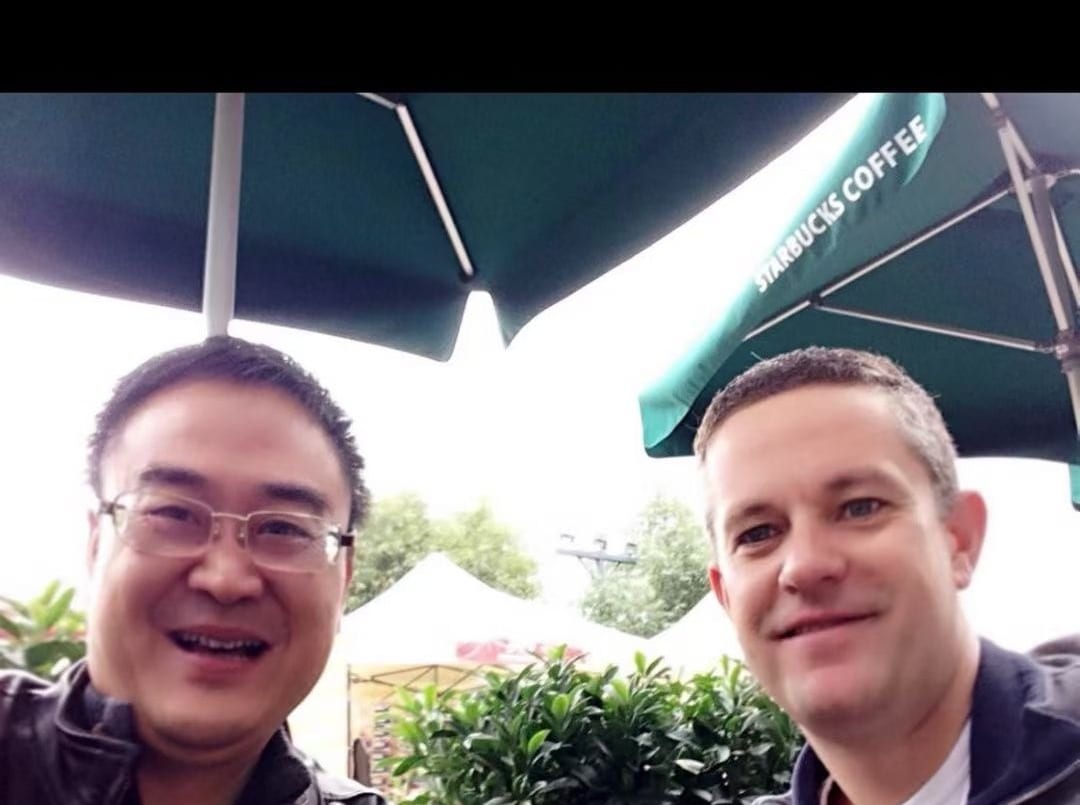
On February 1, 2026, John Furner succeeded Doug McMillon as global president and CEO of Walmart. Both executives have deep roots in frontline retail and held major responsibilities in Walmart’s China or international businesses. In 2014, McMillon had just become global CEO while Furner was gaining experience in China as chief merchandising and marketing officer. The photos below show the author with McMillon in Bentonville on the day of the company’s official announcement, and with Furner in Shenzhen. Twelve years later, the company ranked first on the Fortune Global 500 completed another leadership transition.
During McMillon’s tenure, Walmart continued investing in e-commerce, Pickup, delivery, store digitization, warehouse automation and third-party Marketplace. In December 2025, Walmart transferred its stock listing from the New York Stock Exchange to Nasdaq and used “People-Led, Tech-Powered” to express its next stage of development. The move did not alter its underlying retail business, but reflected the company’s confidence in emphasizing its technology and platform capabilities to investors.
Furner soon faced a test from the capital markets. Walmart U.S. comparable sales grew 2.6% in the fiscal 2027 second-quarter results announced in August, below analysts’ expectations of 3.8%, and the shares plunged 9.2% that day. The same report showed 24% growth in Walmart U.S. e-commerce, 40% growth in store-fulfilled delivery and more than 50% growth in Marketplace net sales. Traditional retail growth was under pressure while digital commerce and fulfillment services continued expanding quickly. The key to understanding Furner’s next strategy is how these sources of growth reinforce one another within the same company.
In October, Walmart announced its next-generation fulfillment center in Stockton, California; a $120 combined Walmart+ and Sam’s Club Plus membership; and new interfaces for external AI shopping agents. Together with ongoing store automation, digital shelf labels, drones and Marketplace development, the business direction is becoming clear: strengthen an already geographically advantaged U.S. retail network so that it can handle orders faster and connect customers with a wider assortment of products.
 |  |
|---|
Figure 1: Author with Doug McMillon and John Furner in 2014. Source: Author’s photographs
2. More than 5,000 locations: The hardest-to-replicate asset behind digital fulfillment
As of July 31, 2026, Walmart operated 4,615 Walmart locations and 602 Sam’s Clubs in the United States, totaling 5,217 retail locations. According to Walmart, about 90% of the U.S. population lives within ten miles of a store or club. This coverage has long helped Walmart attract customers, build purchasing scale and maintain its low-price advantage. Furner’s strategy is to turn this exceptionally dense network into an omnichannel hybrid micro-fulfillment network.
| 5,217 Walmart and Sam’s Club U.S. locations | 90% Share of U.S. population living within 10 miles of a location |
|---|---|
| +40% FY27 Q2 store-fulfilled delivery growth | +24% FY27 Q2 Walmart U.S. e-commerce growth |
Figure 2: U.S. store network and fulfillment growth. Source: Walmart official disclosures
Note: The location count includes 602 Sam’s Clubs.
Historically, a Supercenter was organized primarily around in-store shoppers: goods moved from regional distribution centers to stores, associates stocked the shelves, and customers selected their purchases and took them home. Today, the same store serves four order types: purchases made on-site; online orders collected through Pickup; same-day or hours-long home delivery to nearby households; and qualifying lightweight items delivered by drone. These channels may draw on the same store inventory but require different picking, staging, handoff and delivery workflows.
This shift should not be viewed simply as moving from selling products to delivering them. Walmart has always handed merchandise to customers. The real upgrade is that its high-density stores now support local fulfillment for online orders while continuing their retail functions. Each store capable of processing online orders serves as a hybrid node: selling to shoppers on the floor while picking from inventory for Pickup and home delivery across nearby communities.
From an operating-economics perspective, proximity to customers reduces transportation distance for some orders and avoids shipping every local order from a distant e-commerce warehouse. Speed comes with operating requirements: online picking uses labor, aisles, backroom and staging space, while inventory discrepancies can cause stockouts or substitutions. Walmart’s investments in automation, digital shelf locations and order routing aim to process growing online volumes without letting incremental fulfillment work rise at the same rate as order counts.
Walmart has already disclosed results. In the first quarter of fiscal 2027, store-fulfilled delivery volume had more than doubled compared with two years earlier, and more than 36% of these orders were delivered within three hours. Store-fulfilled delivery grew another 40% year over year in the second quarter. Stores are becoming an increasingly important foundation for Walmart’s e-commerce growth.
3. From a 10 a.m. Supercenter visit to a hybrid fulfillment process
During a recent WeCross visit to a Walmart Supercenter at about 10 a.m., two groups of associates were working around the same shelves. Some were moving replenishment carts and restocking boxes of merchandise, while others pushed picking carts with blue totes, selecting items one by one for online orders. The sales floor was still serving ordinary shoppers, while the parking lot offered a separate, spacious Pickup area. This scene made the store’s dual function more tangible than any technical diagram.
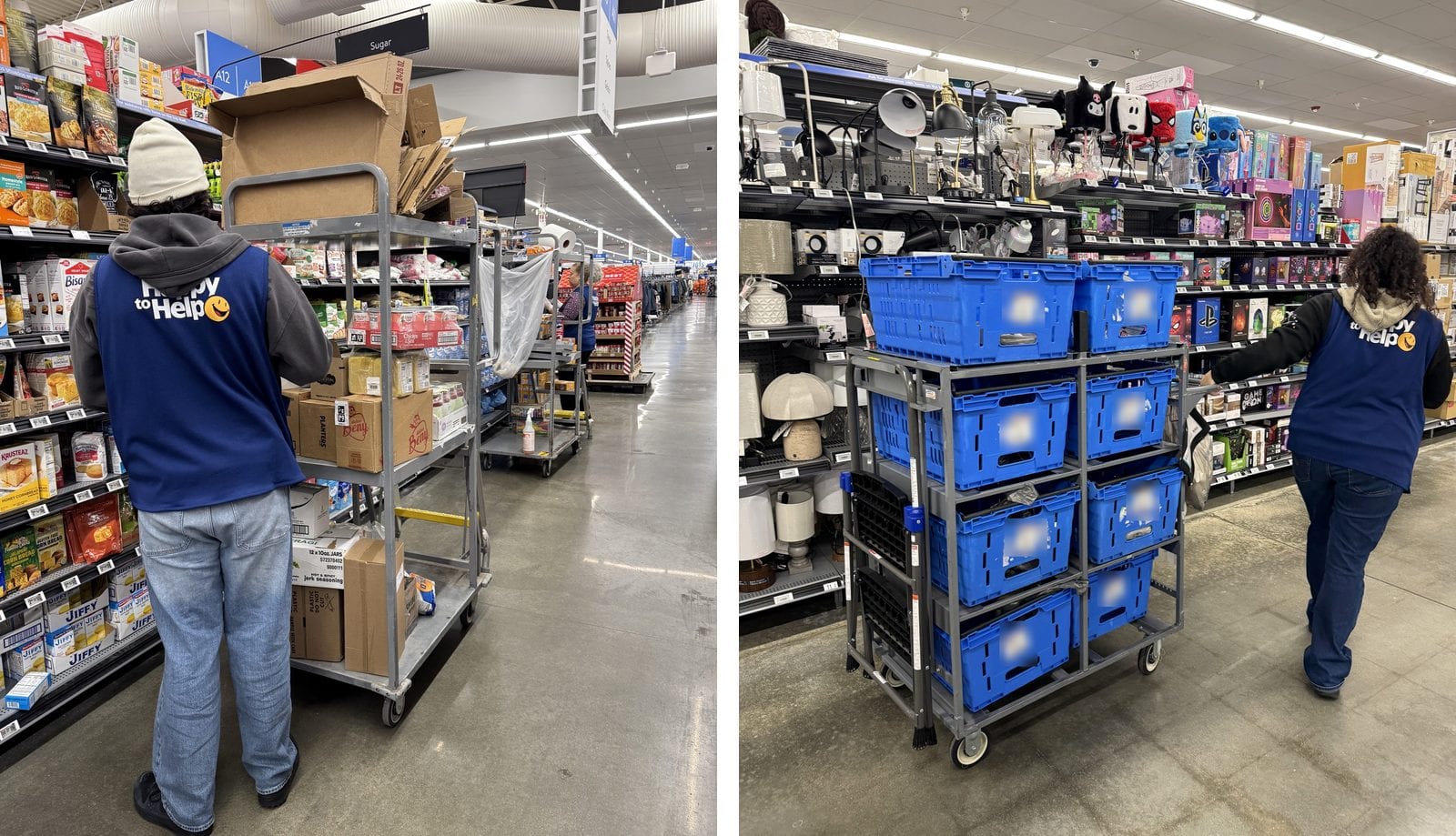
Figure 3: Shelf replenishment and online-order picking side by side. Source: WeCross field photography
After a customer places an online order, the system confirms available inventory and the fulfillment method. With Pickup, associates select products inside the store, stage chilled, frozen and ambient items separately, and bring the order to the car at the scheduled time. With local Delivery, the order moves through driver dispatch and handoff. Inventory location, item accuracy, working sequence and parking-lot coordination all affect delivery speed.
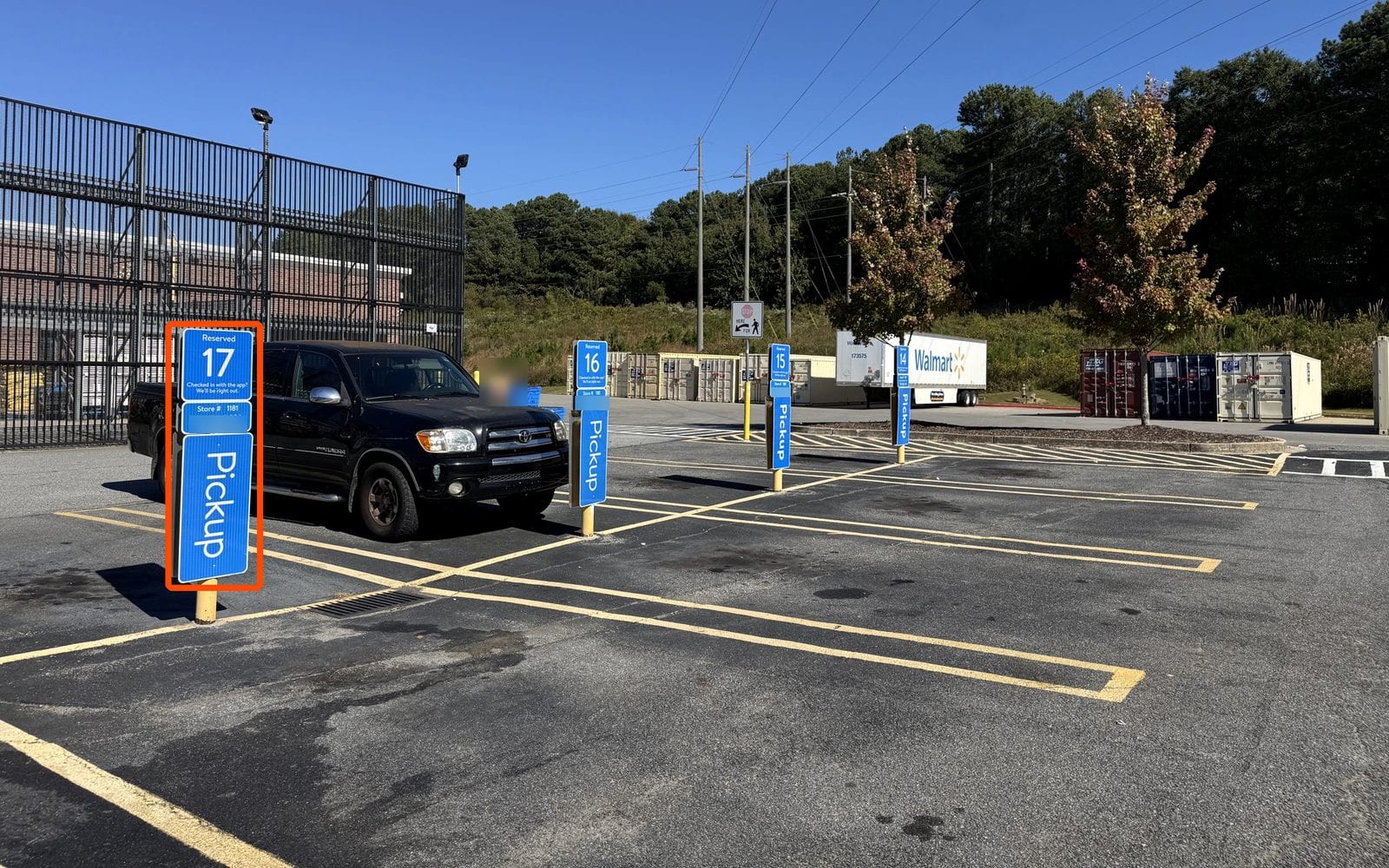
Figure 4: Walmart Pickup parking area. Source: WeCross field photography
A defining feature of this network is that retail operations and warehousing operations share merchandise and order-processing resources. Stores with strong sales and concentrated online demand face a growing picking workload. If every item must be picked by associates walking through aisles containing tens of thousands of SKUs, fulfillment capacity is constrained by walking time, customer traffic and shelf-location accuracy. Walmart is therefore improving sales-floor picking while moving some online-order work into dedicated backroom areas to reduce repetitive movements.
4. MFC/APD: Bringing robots into the store backroom
Walmart initially referred to in-store automated fulfillment facilities as Market Fulfillment Centers (MFCs), increasingly using the term Accelerated Pickup and Delivery (APD) from 2025. The central change is in how merchandise is picked: suitable SKUs are placed in high-density storage, robots bring the product containers to employees, and associates complete picking, scanning and order assembly at fixed workstations.
In traditional store picking, people go to the merchandise. A Goods-to-Person system brings merchandise to people. Walmart’s early Alphabot pilots tested robotic handling in ambient, chilled and frozen temperature zones. Fresh produce, bulky goods, unusual formats and other products that are difficult to automate continue to be picked by associates from the selling floor or other areas. The two processes work together to serve the product mix of a general-merchandise retailer.
Automation offers more than faster robotic movement. First, concentrating high-frequency SKUs reduces retrieval distance in limited space. Second, system-managed order sequences reduce employees’ walking and repeated searching. Third, dedicated online-order processing areas reduce congestion with shoppers in retail aisles. Fourth, standardized processes improve order accuracy and peak-period capacity. For a store processing hundreds or thousands of online orders, small savings on each pick add up to substantial labor hours.
APD follows an investment model of higher upfront spending and sustained operating efficiency. Equipment, space, software and maintenance involve fixed or semi-fixed costs. Stable online-order volume and higher coverage of automatable SKUs improve utilization and employee productivity. Lower-volume stores or those with complex product mixes may be better served by lighter manual processes. The decision calls for analysis of population density within three, five and ten miles; online order volume; SKU mix; backroom space; temperature requirements; and existing logistics facilities.
In 2025, Walmart signed a commercial agreement with Symbotic to purchase 400 APD systems after agreed performance criteria are met, with an option for another 200. The agreement also included a $520 million development funding arrangement. The pilots demonstrated meaningful potential for operational efficiency and return on investment, while providing the processes needed for broader, repeatable deployment.
Pickup, Express Delivery, regular home delivery and other online orders all benefit from the automated fulfillment infrastructure. Drone delivery, which serves lightweight products with particularly demanding delivery times, can also draw on faster automated processing to achieve its rapid-delivery value.
5. Digital shelf labels: From pricing displays to precise shelf-location guidance
Many online orders still need to be picked from merchandise on the sales floor. A large Supercenter may stock a dozen or more colors, flavors and package sizes from the same brand. Incorrect shelf labels and misplaced replenishment add employee movement and cause order shortages. Digital Shelf Labels (DSLs) are evolving from price displays into part of the store operating system.
Walmart has divided light-guidance applications into three scenarios serving shoppers, replenishment associates and online-order pickers:
- Shop to Light (shopper-facing guidance)
- Challenge: In dense merchandise categories such as spices and sauces, cosmetics with similar colors, or infant formula in many sizes, dozens of packages may look almost identical. Even after reaching the correct shelf, a customer can struggle to find the exact product.
- Solution: After searching for an item in the Walmart app, a shopper near the correct shelf can tap the Find/Light feature. An LED at the corner of the product’s digital shelf label flashes to pinpoint its location.
- Stock to Light (associate replenishment guidance)
- An associate scans the barcode on an unpacked product with a handheld device, causing the digital shelf label at its designated location to flash. This reduces repeated checks against paper labels or similar SKUs, helps prevent misplaced products and speeds up replenishment.
- Pick to Light (online-order picking guidance)
- For orders delivered by drone, Spark or Online Pickup & Delivery (OPD), the associate follows a picking route and receives the next item on a handheld device. The corresponding shelf label flashes, saving the time otherwise spent searching for the product. This is presented as one of the hardware features supporting the goal of completing order preparation within 10–30 minutes.
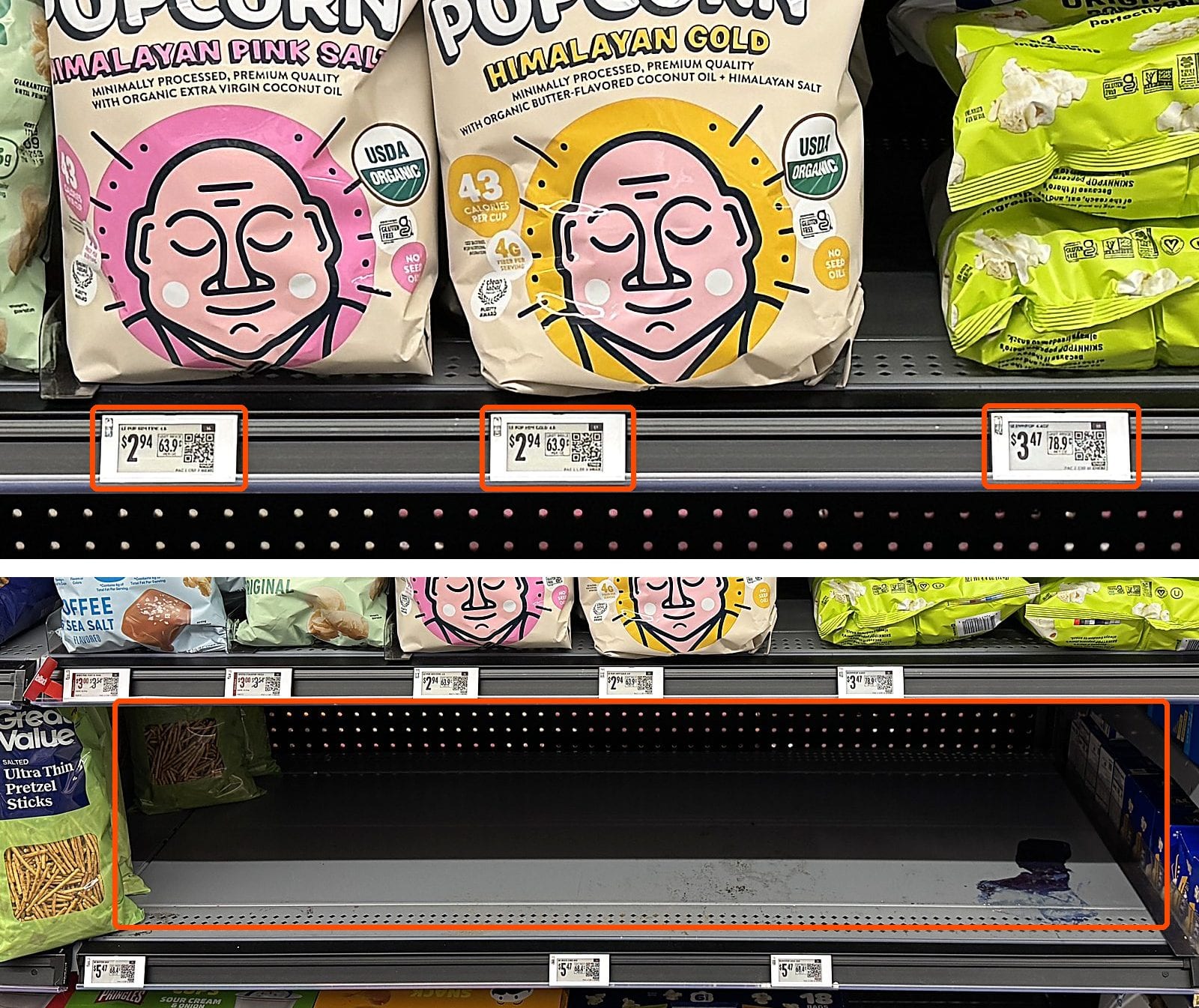
Figure 5: Digital shelf labels and product locations. Source: WeCross field photography
All three functions share the same shelf infrastructure and improve shopping, replenishment and fulfillment. Their value comes from precise digital identification and guidance: an associate may walk less, spend less time comparing labels and avoid selecting a similar but incorrect SKU. In this way, light guidance complements backroom robotics. Shop to Light also improves the customer experience and strengthens engagement with the Walmart app and stores.
Walmart is connecting shelf information, associate handheld devices, product records and order systems into a more granular digital operating capability.
The technology also involves consumer trust. As digital shelf labels spread, dynamic pricing sparked debate in the U.S. market. Furner emphasized publicly that the LEDs used for locating goods operate separately from price changes, that shelf labels do not identify shoppers on site, and that prices do not automatically change based on an individual customer’s identity. Efficient operations and transparent pricing together help earn consumer confidence in infrastructure that may reach thousands of stores.
6. The final miles: Pickup, Spark and Wing drones play different roles
Picking an order in the store is only half the process. Delivery to customers follows different routes. Pickup uses existing store parking areas and staff, allowing the shopper to complete the last leg; Spark and other ground-delivery networks can carry larger baskets and serve wider areas; drones handle lightweight, time-sensitive orders in defined service zones. The right option depends on the product, distance, local conditions and order volume.
Walmart and Wing operate a Store-to-Home drone-delivery model that sends merchandise directly from participating stores to customers’ homes.
The operating and drop-off process works as follows:
- Takeoff point (store hub): Wing establishes a small drone takeoff and landing site at designated Walmart Supercenters, often at a corner of the parking area or a dedicated section. After an eligible customer places an order, Walmart associates pick and pack the merchandise and load it for drone pickup.
- Flight and delivery: The drone follows an automatically planned route to the customer’s home, typically covering a three- to six-mile radius around the store. Flight speed can reach about 65 miles per hour (approximately 100 km/h).
- Delivery without landing: The drone hovers about 23 feet (seven meters) above the customer’s property, lowers the package by tether onto a designated lawn, front yard or driveway, and then retracts or releases the tether and returns to base.
- Typical use cases: The service focuses on urgently needed, frequently purchased lightweight goods—fresh items, snacks, eligible over-the-counter medicines and forgotten household essentials—often within 10–30 minutes and typically for packages weighing less than three pounds.
In May 2026, Walmart announced that its drone-delivery partners had completed more than one million deliveries, averaging about 23 minutes and operating from 66 stores across four states at the time. In October, Walmart and Wing announced plans to expand to Denver and Seattle in 2027 as their joint network advances toward more than 270 Walmart locations.
Drone delivery illustrates how a dense physical network can reach into surrounding communities: everyday food, forgotten ingredients, small household supplies and eligible nonprescription products can arrive in much less time. Drone operations have limits involving payload, weather, drop-off location and cost per order, so they are unlikely to be the default for every delivery soon. Walmart is demonstrating the strength of having the densest physical store footprint in the United States: it can use different delivery methods to serve different needs.
Store space is being adapted accordingly. Some new and remodeled locations have larger staging, cold-chain and vehicle handoff areas for Pickup and Delivery. In high-order-density areas, Walmart is also testing Dark Stores dedicated to online orders without regular in-store shoppers. Dallas has a pilot, and Bentonville has been reported as another planned location. Dark Stores test the efficiencies of a fulfillment-only model, rather than turning every Supercenter into a pure distribution warehouse.
7. Large fulfillment centers: Assortment breadth and order capacity behind the store network
Dense retail stores are close to shoppers but cannot carry every long-tail, oversized or deep-inventory item. Regional Distribution Centers (RDCs/DCs), large Fulfillment Centers (FCs), WFS warehouses and stores each serve a role in Walmart’s multi-layer inventory and order network. Stores provide local speed, regional warehouses replenish inventory, and automated FCs offer wider assortment, deeper stock and cross-region order handling.
On October 8, 2026, Walmart opened its fifth next-generation fulfillment center in Stockton, California, covering more than 900,000 square feet. The company said high-density automated storage reduced its traditional 12-step operating process to five steps, improving storage capacity and daily order throughput. The center will also handle eligible Marketplace inventory through Walmart Fulfillment Services (WFS).
Walmart Commits Another $6 Billion to Regional Distribution Center Automation
On October 29, Walmart and its long-term automation partner Symbotic announced an expanded agreement to add automation to 25 U.S. regional distribution centers over the coming years, involving approximately $6 billion in commitments. The investment also includes research and development for next-generation shelving, item-picking and inventory-management technologies.
The initiative is designed to increase storage capacity, merchandise flow efficiency and upstream inventory management for e-commerce in the regional distribution network, so more products can reach stores and fulfillment nodes faster.
The investment strengthens Walmart’s multi-layer fulfillment system: regional distribution centers organize large-scale inventory and replenish stores; automated fulfillment centers process online assortment and orders; and dense retail stores and their backrooms provide local fulfillment close to consumers.
With more efficient upstream storage and faster inventory flows, Walmart’s more than 5,000 U.S. retail locations can receive stronger product supply and replenishment support, amplifying their geographic advantage in reaching customers quickly.
Walmart’s speed depends on more than the nearest store. A long-tail item unavailable locally may ship from a large FC; a popular item out of stock at one store requires regional replenishment to put inventory back within reach. The network must balance local availability with nationwide assortment without placing every SKU in expensive neighborhood space.
For merchandising and inventory management, the next level of efficiency comes from linking demand forecasts, stock location and actual orders. Fast-moving goods need strong on-shelf availability, while long-tail items can be concentrated in fewer locations. Order-routing systems choose nodes that balance time and cost. The efficiency of a scaled retailer emerges from thousands of these repeated allocation decisions every day.
| Dense U.S. physical retail network | Geographic reach · Local inventory · Established supply chain |
|---|
↓
| MFC / APD Automated backrooms and order picking | Large FC / RDC Assortment breadth, inventory and replenishment |
|---|---|
| Digital shelf labels and shelf locations Item location, stocking and picking efficiency | Pickup / Spark / Wing Pickup, ground delivery and drones |
↕
| AI shopping · Combined membership · Marketplace | Customer demand, repeat visits and assortment |
|---|
Figure 6: Walmart’s hybrid fulfillment and commercial network. Source: WeCross analysis
Taken together, store density places inventory close to consumers; MFC/APD and digital shelf labels improve picking and replenishment; RDCs and large FCs provide inventory depth and resupply; and Pickup, Spark and Wing handle the last leg of delivery. These capabilities form Walmart’s hybrid fulfillment network, combining physical retail and nationwide e-commerce logistics into a distinctive competitive advantage.
8. The second layer of competition: AI shopping, combined membership and Marketplace
As Walmart deepens its domestic U.S. fulfillment network, it is also competing for the places where customers place orders and for the assortment available on its platform. Fulfillment determines how purchases reach buyers; AI, membership and Marketplace influence where shoppers discover products, what they choose and how often they return. Together, more demand can increase the utilization of Walmart’s network.
Sparky and external agents: Bringing products into more shopping conversations
Sparky is Walmart’s AI shopping assistant within its own app. It helps shoppers describe needs in natural language, compare products and complete shopping tasks. During a WeCross store visit, we compared a Sparky recommendation in the Walmart app with a product on the shelf. The AI suggested a different digital scale, with specifications and pricing that differed from the exact model we saw in-store.
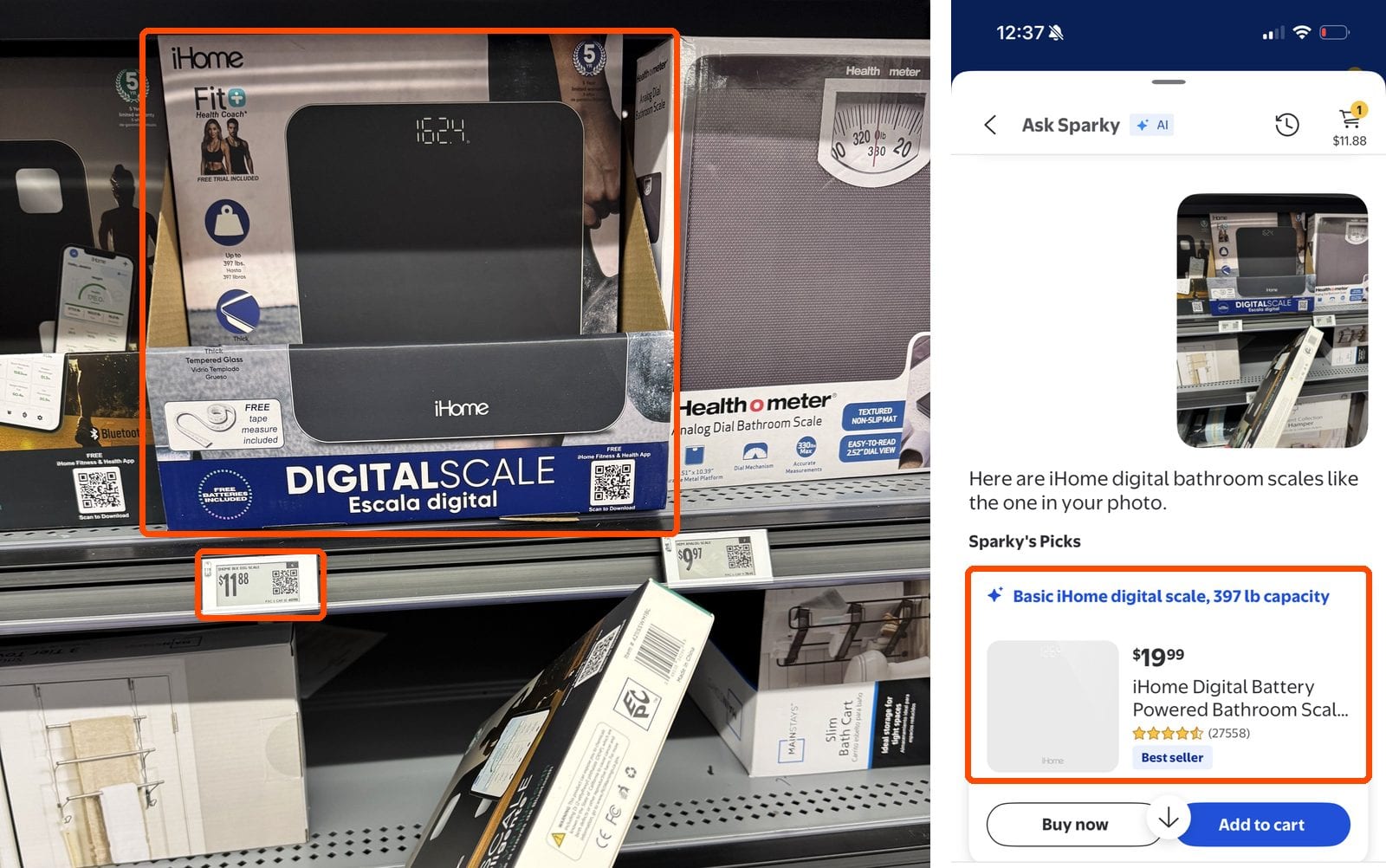
Figure 7: In-store product and Sparky recommendation. Source: WeCross field photography
Walmart is actively working with AI shopping interfaces including ChatGPT, Gemini and Muse, in contrast with Amazon’s decision to block access for Muse AI agents. On October 21, 2026, Walmart announced Agent Profiles, the Walmart Agent Gateway and rules for AI-agent access, outlining integrations with ChatGPT, Gemini, Muse and other shopping experiences. Agent Profiles allow consumers to distinguish purchases made by different agents within one Walmart account, while the Gateway is intended to offer machine-readable access for more reliable shopping tasks.
The strategic thinking is clear: Walmart is using its strengths in inventory, orders and delivery to compete across the next generation of shopping decision points. It is another expression of the company’s distinctive competitive position and of Furner’s ambition.
The $120 combined membership: Connecting two shopping rhythms
On October 20, 2026, Walmart launched a combined Walmart+ and Sam’s Club Plus annual membership priced at $120 for new members, about $100 less than buying the two memberships separately. Benefits include qualifying delivery services across both businesses, a choice of streaming service, fuel savings and Sam’s Cash.
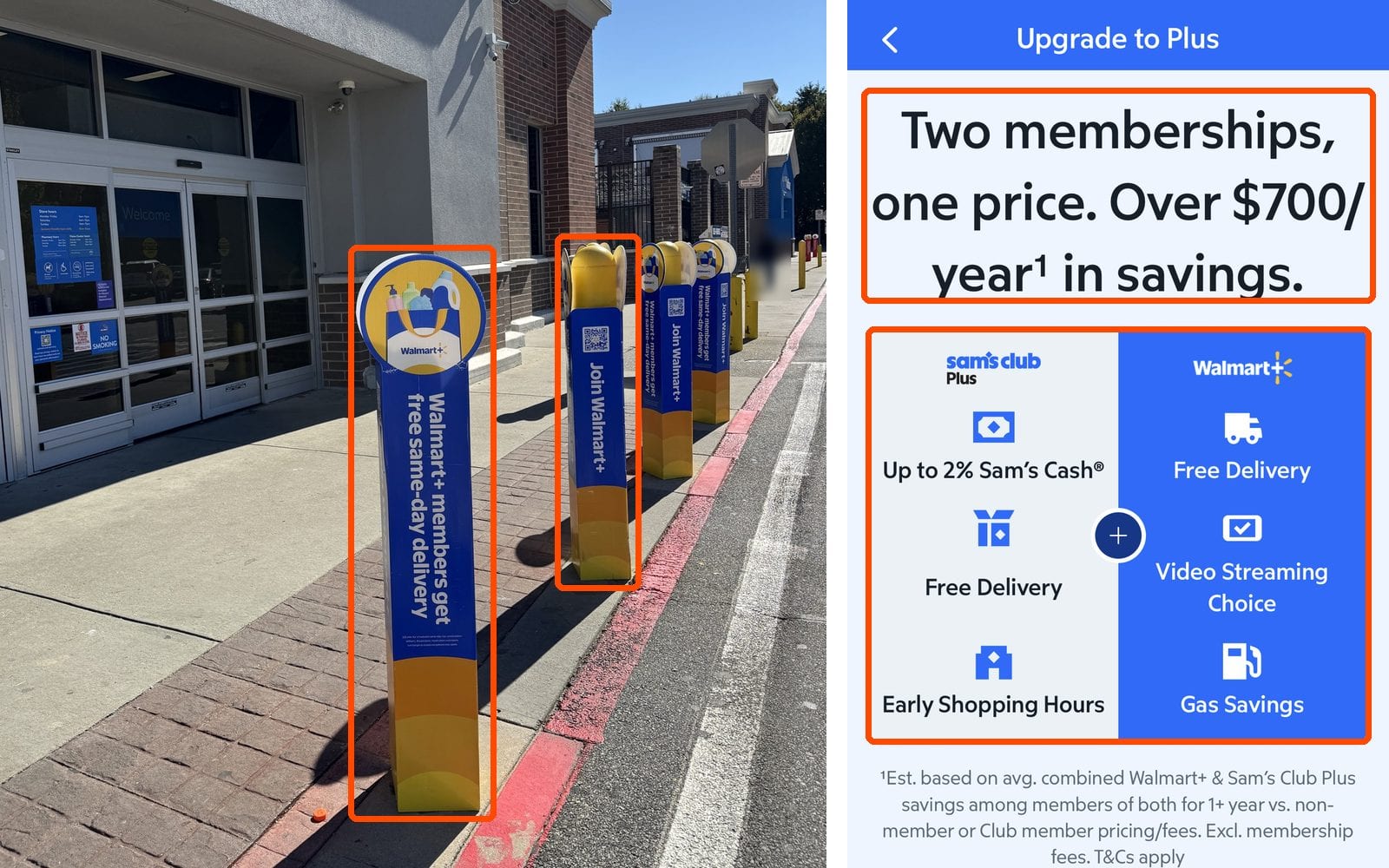
Figure 8: Membership promotion and Walmart app interface. Source: WeCross field photography
Walmart and Sam’s Club address different purchasing needs within the same household. Walmart serves regular small-pack purchases of food, cleaning products and urgently needed items, while Sam’s Club serves bulk stock-up trips, family gatherings and seasonal purchases. These occasions have different rhythms and package formats but draw on the same household spending. The combined membership helps customers move between the two and strengthens loyalty to Walmart’s broader retail system.
Marketplace: Connecting third-party products to assortment and fulfillment
Walmart U.S. Marketplace net sales grew more than 50% year over year in fiscal 2027 Q2, and the company said nearly half of Marketplace activity already flowed through its fulfillment services. This indicates that third-party products are moving beyond supplemental Walmart.com listings into WFS inventory storage, order processing and returns.
WFS provides picking, packing, delivery and related returns for eligible Marketplace orders, giving qualifying sellers access to scalable logistics capabilities. It operates separately from ordinary store Pickup, Express Delivery and Wing drone services. Walmart continues exploring closer links among fulfillment channels, with service availability shaped by the merchandise, inventory location and platform rules.
AI shopping expands product discovery; Marketplace broadens assortment; WFS gives third-party sellers more consistent delivery; and combined membership encourages repeat purchases. Beyond product sales, advertising, membership fees and fulfillment services are additional sources of growth. Walmart reported global advertising growth of 38% and global membership fee growth of 17% in the second quarter.
9. Extending upstream: International shipping and supply-chain services as a platform
Alongside its domestic U.S. retail and fulfillment network, Walmart is making more upstream logistics capabilities available to third-party sellers. This development is particularly relevant to Chinese businesses.
Walmart Cross Border: Imports enables eligible sellers to move Full Container Loads (FCL) or Less-than-Container Loads (LCL) from China, Vietnam, India and Cambodia into the U.S. WFS network. Quotes, booking, tracking and payment can be managed in Seller Center, using logistics services organized by Walmart and its partners. Walmart has disclosed average port-to-door transit of about 23 days on a specified China-to-Los Angeles route, and an average reduction of about 15% in total supply-chain costs in its FY26 internal data.
Cross-border sellers have often coordinated ocean freight, customs brokerage, trucking, warehouse appointments and inventory transfers across multiple providers, creating extra handoffs and exception-handling costs. Cross Border brings more of these stages into one logistics service, making it easier to coordinate stock arrivals with WFS receiving schedules.
Ship with Walmart and Walmart Multichannel Solutions extend these services. Eligible sellers can buy shipping labels at Walmart-negotiated carrier rates. Inventory stored in WFS can also fulfill orders from Shopify, Amazon, eBay, Temu, TikTok Shop and independent sites in unbranded packaging. Walmart’s warehouses and delivery services thus process orders beyond Walmart.com; sellers may reduce duplicate inventory across warehouses while also considering their dependence on one fulfillment provider.
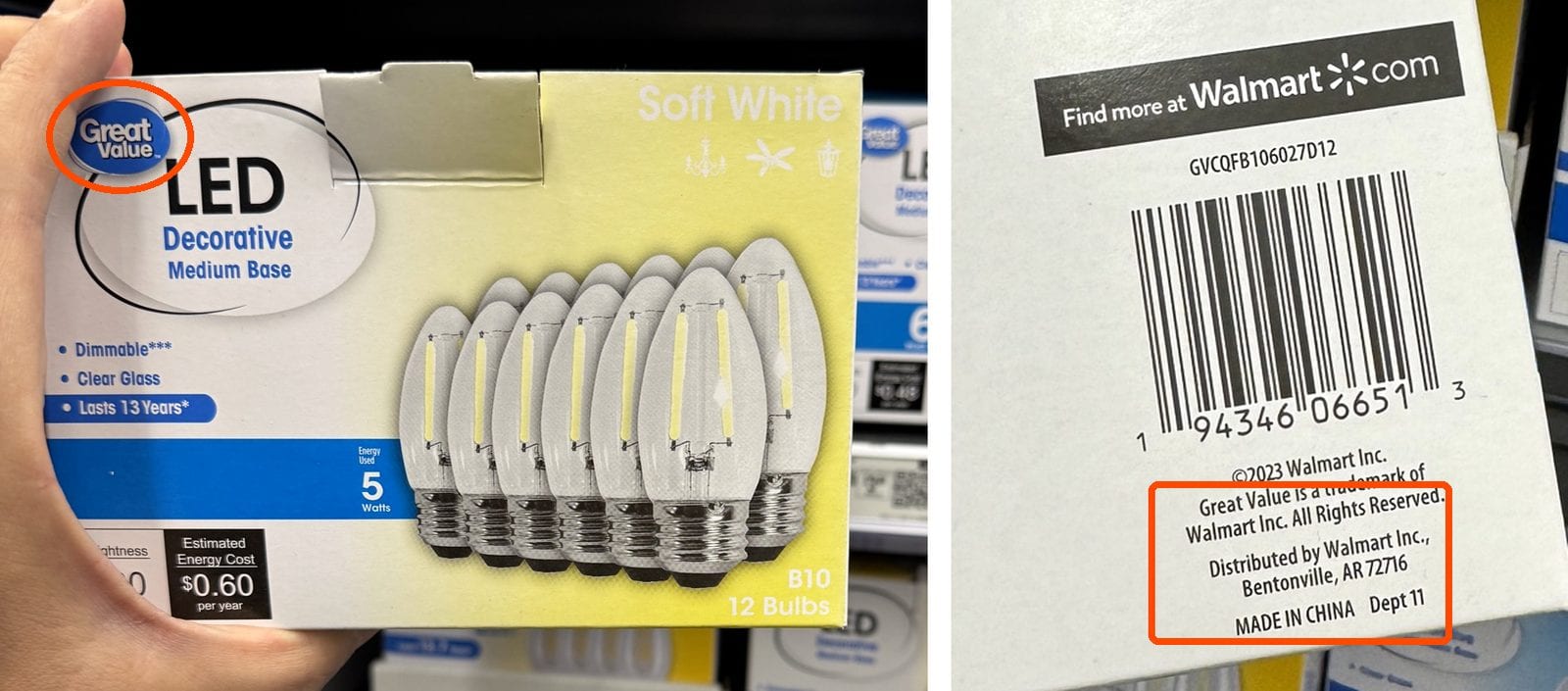
Figure 9: Country-of-origin label on a Great Value product. Source: WeCross field photography
From U.S. customer demand to cross-border transportation of third-party merchandise, Walmart is using more of its accumulated scale capabilities. Customer demand and membership relationships generate orders, Marketplace gathers products, warehousing and delivery complete fulfillment, and international transportation makes it easier for compliant overseas inventory to enter the system. This is a clear direction in which a retail operation is extending into a broader commerce platform.
10. The competitive equation: Density, speed and operating economics
Walmart and Amazon both compete to offer more convenient shopping, but their accumulated assets differ. Amazon has a massive online order base, fulfillment centers, delivery stations and Prime membership, with strengths in nationwide e-commerce logistics, long-tail assortment and digital shopping. Walmart combines dense general-merchandise stores across the United States with frequent food and daily-essentials purchases, mature regional supply chains and inventory already present in neighborhoods. Kroger also has strong stores and grocery expertise, but faces different limits in network density, assortment breadth and national platform scale.
Walmart is connecting stores and large FCs more closely, improving the mix of manual and automated work and drawing more orders through AI and membership. The resulting advantage reaches beyond a simple promise of being faster: it depends on store location, available inventory, timely replenishment, order accuracy and the ability to match the customer’s desired delivery method.
Operating challenges remain. Handling more online orders requires additional labor and workspace in stores, with peak-hour competition for aisles between pickers and shoppers. APD and large FCs add equipment investment and maintenance expenses, while very fast delivery also faces constraints in payload, weather, customer density and per-order delivery cost. Important metrics include order density, in-stock rate, picking productivity, substitution rate, on-time delivery and the profitability of incremental services.
Furner has introduced “Build Once, Scale Globally,” an approach to organize shared technology, products and platform capabilities and reduce duplicate development across formats and business units. For a group with multiple retail formats and more than ten thousand locations globally, this is a significant opportunity to improve efficiency and save costs, and an important strategic direction.
11. What Walmart’s transition means for Chinese brands and suppliers
For Chinese brands, Walmart’s transition begins with understanding the different types of business relationship available. Walmart is a merchandise buyer, a digital retail platform, a fulfillment provider and an increasingly important organizer of international logistics. Each business has its own entry rules and commercial requirements. Companies can choose how to participate based on their products, brand capabilities and U.S. operating foundation. Our separate “Research Report on Pathways for Chinese Brands Entering Walmart in the United States” explains three channel categories, four entry paths and the corresponding fulfillment choices.
For brands already on Walmart’s physical shelves, store sales and online fulfillment are increasingly interconnected. Products suited to frequent replenishment, Pickup or delivery need reliable local availability, clear pack sizes and accurate product information. The combined membership connects Walmart’s everyday small packs with Sam’s Club family-size and bulk packs across different household occasions. Brands should coordinate packaging and pricing across channels. Drone and minute-level delivery open additional occasions for selected products, without making lightweight formats appropriate for every product.
For Marketplace sellers, product information quality and actual fulfillment performance matter equally. Sparky and external AI shopping agents may change how demand is discovered. Clear descriptions of use cases, specifications, occasions and inventory availability are more useful than chasing unverified AI traffic tricks. WFS, multichannel fulfillment and Cross Border offer qualifying sellers another form of infrastructure for reaching U.S. consumers.
For manufacturers and supply-chain businesses, Walmart’s evolving model puts greater emphasis on efficiency, stable supply and rapid response. Private-label and contract manufacturing, mainstream retail supply and cross-border logistics offer different opportunities. The Walmart that Chinese businesses engage with is increasingly a comprehensive commercial network linking U.S. consumers, store inventory, digital platforms and global product supply.
Conclusion
Walmart’s competitive advantage starts with a dense physical store network built over decades. Stores continue serving walk-in retail while increasingly processing online orders through manual picking, automated backrooms, digital shelf labels and local delivery. RDCs and large FCs provide deeper inventory and replenishment, while Pickup, Spark and Wing deliver merchandise across a range of distance and speed requirements.
Building on this U.S. fulfillment network, Sparky, external AI interfaces, combined membership and Marketplace connect more shopping demand, consumers and products. Walmart is also extending upstream into international transportation and third-party fulfillment, bringing more global merchandise into U.S. warehousing. Together these moves point to the next stage under Furner: turning existing store density and supply-chain scale into stronger fulfillment efficiency and expanding the value of the wider commercial network.
For practical steps toward doing business with Walmart, see our “Walmart Onboarding Toolkit,” which covers application steps, document preparation, readiness assessment and cost calculation tools.
Research statement: Based primarily on public information available through October 29, 2026, and firsthand WeCross field observations. Field observations do not represent every Walmart store; pilots and announced plans are identified in the article. This is commercial research and does not constitute investment or legal advice.