What Has Changed at Kroger in Eight Months? New Opportunities for Chinese Brands
Eight months into Greg Foran’s tenure as Kroger CEO, the retailer is moving toward simpler, more consistent everyday prices, refocusing e-commerce on stores, and planning to cut 3,000 corporate jobs. Expanding private labels and dedicated Asian-food sections may create new shelf-space opportunities for Chinese brands.
1. Who Is Greg Foran, and Why Did Kroger Hire Him?
On February 9, 2026, Kroger announced Greg Foran as its CEO. According to Bloomberg, he is the first CEO Kroger has hired from outside the company. Foran built his career in retail in New Zealand and Australia before joining Walmart in October 2011. He became president and CEO of Walmart China in March 2012, then CEO of Walmart Asia and, later in 2014, president and CEO of Walmart U.S. He led the U.S. business until November 2019. Having served as CEO in China, he even has a Chinese name: Gao Fulan. Kroger’s appointment announcement said Walmart U.S. delivered 20 consecutive quarters of comparable-store sales growth under his leadership. After leaving Walmart, he spent more than five years as CEO of Air New Zealand.
Kroger hired him for precisely that combination of store operations and low-price discipline. Former Walmart executives have joined since Foran arrived: Nate Faust became chief e-commerce officer on September 1, and Mark Ibbotson became chief store operations officer on September 14.
2. Four Changes in Eight Months
1. Simpler, more consistent prices. Kroger has long relied on a high-low pricing strategy: higher shelf prices offset by frequent promotions and loyalty offers. On the June quarterly earnings call, Foran said the company needed to move toward simpler and more consistent everyday value. His point was that Kroger did not have to be the lowest-priced retailer, but did need to be more competitive, more consistent, and easier for customers to understand. On the September earnings call, he explained why, citing Kroger’s own data: more than half of its customers could not make sense of its promotional system. At the same time, Kroger simplified its loyalty points. Fuel Points became Points, redeemable both for fuel discounts and directly against grocery purchases. In WeCross’s on-site observations, even the store parking lot displayed new signs promising “Same Low Prices Any Way You Shop.”
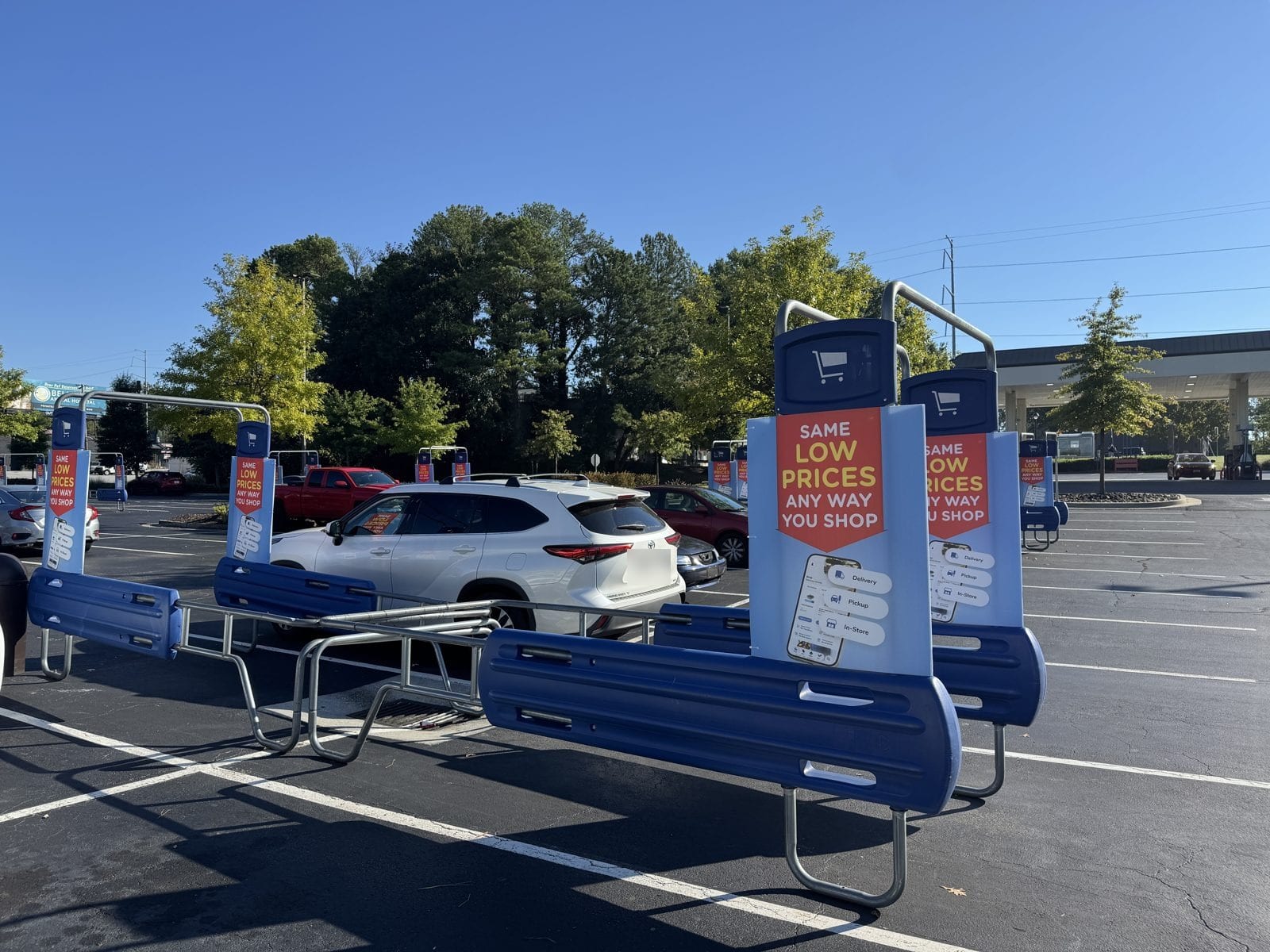
WeCross on-site observation; photographed at a Kroger store parking lot
2. An e-commerce pivot. Kroger had previously bet on Ocado’s automated fulfillment-center model. Before Foran arrived, it had recorded roughly $2.6 billion in impairment charges on its fulfillment network, closed three automated warehouses, and canceled its Charlotte project. E-commerce has since shifted toward store picking, rapid delivery, and third-party platforms. About half of digital growth in the first quarter came from orders delivered within one hour. Results are starting to show: the e-commerce business, including retail media, turned a profit for the first time in the first quarter; second-quarter sales grew 20%, and the business was profitable for a second consecutive quarter.
3. What Kroger is learning from Walmart. The new e-commerce direction follows Walmart’s practice of using its widespread store network as local fulfillment hubs for nearby picking and fast delivery. Nate Faust, who is leading the effort, also has a Walmart e-commerce background. The pricing logic likewise draws on Walmart’s idea of using everyday low costs to support everyday low prices. Foran said every dollar invested in customer value must be earned back through lower costs and greater efficiency—by reducing merchandise costs, expanding direct sourcing, and streamlining headcount. Price cuts will be gradual. On the September earnings call, he likened the process to bringing an aircraft down from 40,000 feet to sea level, descending “1,000 feet at a time.” Kroger is also investing further in retail media and paid membership, two profit sources Walmart relies on as well. Profit in Kroger’s precision-marketing business rose 24% in the second quarter, while its Boost membership echoes the thinking behind Walmart+. But Foran has been clear that Kroger is not trying to win a lowest-price contest: its costs are not the lowest, but it can offer the best value. Citi estimates Walmart’s prices are still 5% to 20% lower than Kroger’s. Kroger is borrowing the approach, not launching a head-on price war.
4. Private label as a pricing weapon. According to reports, Kroger plans to expand its Smart Way private-label line from roughly 130 SKUs to 1,000 over a little more than a year, positioning it against Walmart’s Great Value. Kroger’s private-label penetration rose by about 50 basis points in the second quarter, with growth outpacing national brands. Foran has described private label as one tool for responding to price increases, saying he does not rely on inflation to drive sales.
3. A Newly Announced Workforce Reduction
On October 12, the effort to streamline headcount gained a specific figure. In an internal letter to all employees, Foran said Kroger would eliminate about 3,000 corporate positions over the next three years. Reuters estimated that this represents roughly 37% of its 8,200 corporate employees. The company will identify the affected departments over the coming months. Foran said Kroger had more layers, handoffs, and overhead than it needed; technology would help reduce repetitive work and redirect resources toward lower prices and frontline employees. Media reports noted that this aligns with Kroger’s AI plans announced in September. Kroger had previously said it received only modest tariff refunds and put all of them into pricing. In the second quarter, comparable sales excluding fuel rose just 0.2%, and Kroger lowered its full-year guidance. The question now is whether Foran can repeat at Kroger the 20 consecutive quarters of comparable-store sales growth achieved at Walmart U.S.
4. New Opportunities for Chinese Brands
First, Kroger is pushing private label. As noted above, Kroger plans to expand Smart Way from about 130 SKUs to 1,000, and Asian flavors are an important part of that expansion. In WeCross’s store photos, Kroger’s Chinese Inspirations vegetable and chicken fried rice sit beside Wei-Chuan potstickers and Bibigo dumplings in the Asian frozen-food section. Private-label items and well-known Asian brands competing in the same freezer suggest retailers are treating the category as a priority: shelf space is expanding, assortments are broadening, and demand for products and supply capability is rising. Chinese brands with strong supply chains have a real opportunity to explore this area.
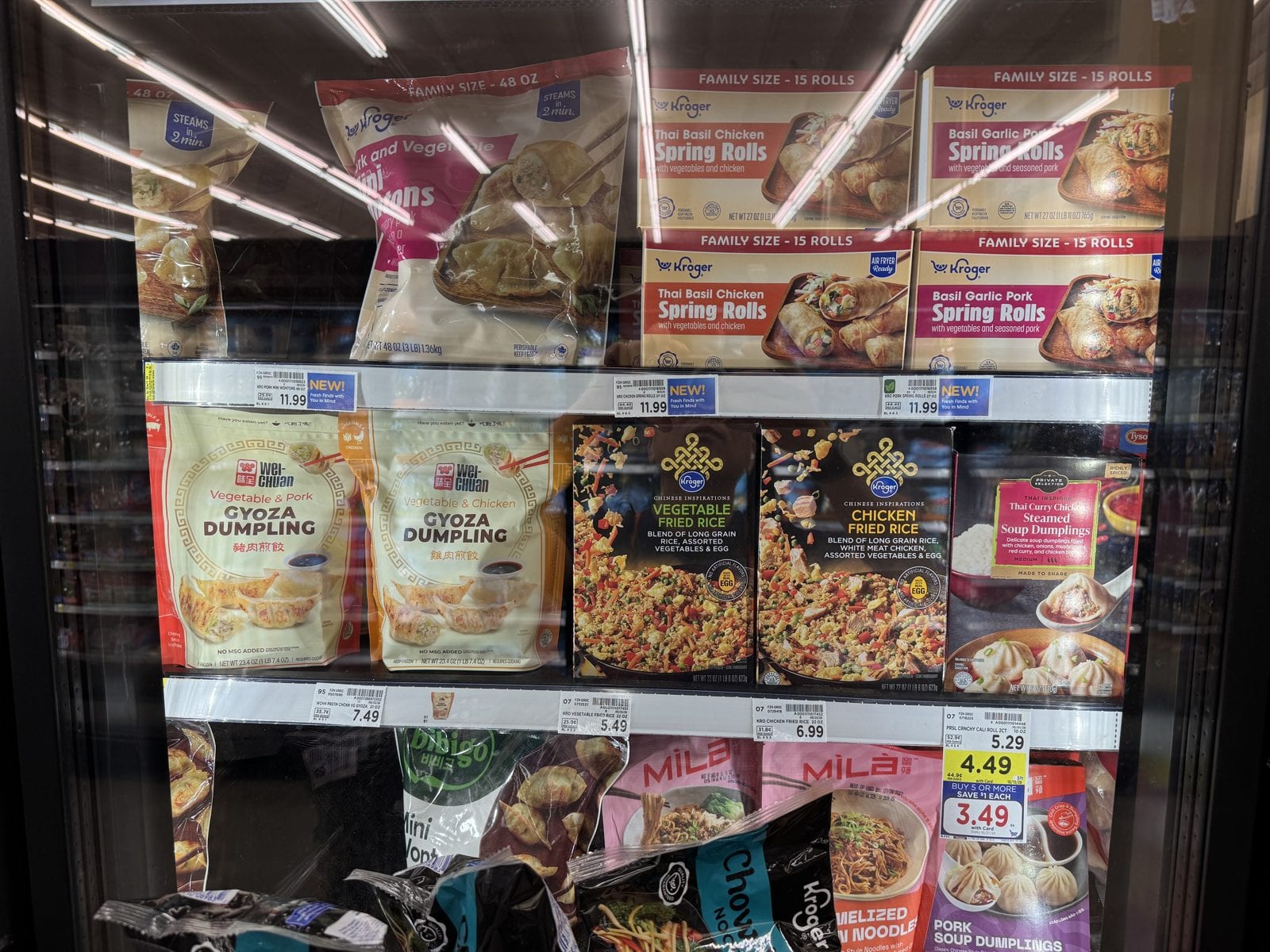
WeCross on-site observation; photographed at a Kroger store
Second, Asian foods have a dedicated aisle. Kroger stores are adding more dedicated shelves for Asian foods. In WeCross’s photos, instant noodles including Buldak, sauces, and snacks are grouped beneath an “asian foods” sign. A dedicated section shows that Asian food has become an established category in mainstream supermarkets: shoppers know where to find it, and new products have a better chance of being seen.
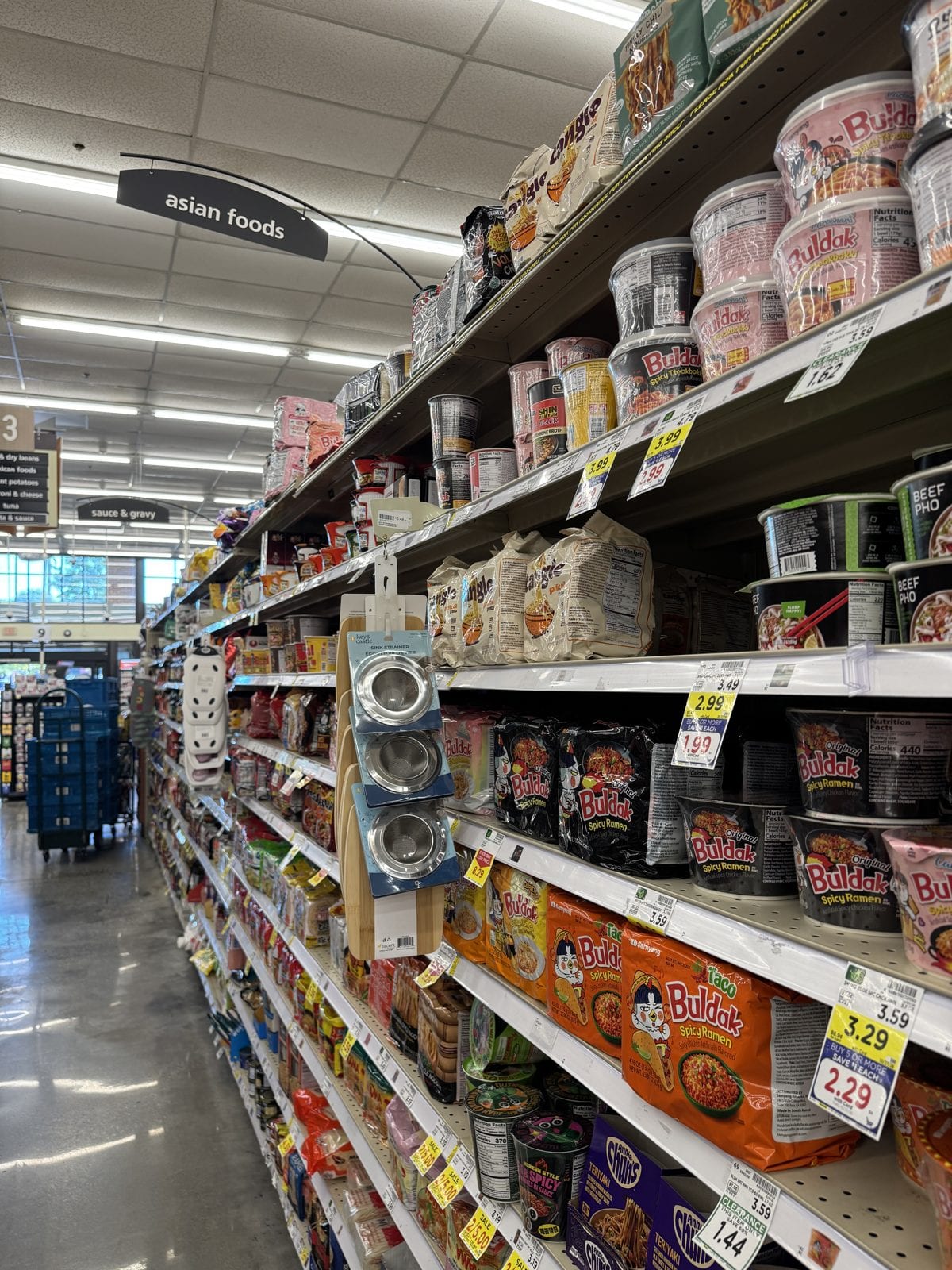
WeCross on-site observation; photographed at a Kroger store
Together, these two trends create opportunities beyond private label alone. As Kroger expands its own brands and widens its Asian-food sections—and given Foran’s nearly three years of experience working in Shenzhen and Hong Kong—Chinese brands looking overseas have more room to think creatively about how to enter the market.