How AI Is Changing the Playbook for Traditional Retail
From Gap, Amazon and Walmart to Meta’s Muse, AI shopping assistants are turning the retail entry point into the new battleground.
On October 5, 2026, during San Francisco Tech Week, Gap Inc. announced a multifaceted AI shopping initiative to mark the 30th anniversary of gap.com. The initiative includes:
- Conversational shopping assistants on Old Navy’s and Banana Republic’s websites and apps. Customers can describe what they want in everyday language and receive tailored product recommendations.
- A partnership between the Gap brand and Alta Daily, an AI-powered digital wardrobe app. It offers curated outfits featuring Gap products that customers can preview on their Alta avatars.
- Access to all Gap Inc. brands—Gap, Banana Republic, Old Navy, and Athleta—through the Daydream platform, where shoppers can search for and discover relevant products using natural language.
Gap Chief Technology Officer Sven Gerjets described these tools as enhancements to traditional e-commerce features—search, filters, and product grids—rather than replacements. The initiative is part of retail’s broader progression from e-commerce to mobile, social, and omnichannel shopping, with AI now seen as the next major transformation.
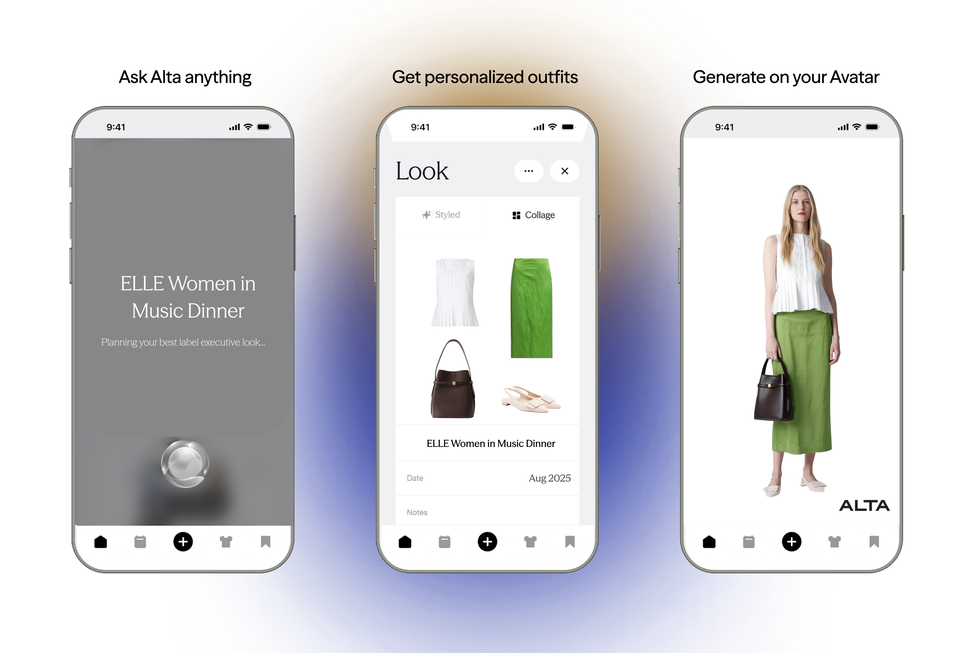
Image: Alta
Gap is not alone. Over the past year, major U.S. retailers have been turning AI shopping interfaces into new channels for product discovery and transactions. The path to discovery is shifting from keywords and category filters toward intent and conversation.
Amazon has the largest scale and the most complete publicly disclosed figures. According to Amazon, about 250 million customers used its Rufus shopping assistant during the year; shoppers who use Rufus are about 60% more likely to complete a purchase. Monthly active users rose about 140% year over year, and interactions rose about 210%. CEO Andy Jassy said Rufus is expected to generate more than $10 billion in annualized incremental sales. In the second quarter of 2026, Rufus and Alexa+ were combined into Alexa for Shopping, covering recommendations, price comparisons, price history, Price Alerts, and Auto-Buy. Global active users nearly doubled, interactions increased more than fivefold year over year, and U.S. customers using the feature spent more than 40% more per order. The assistant can ground its responses in the real-time product catalog, orders, and reviews, while also taking agentic actions such as setting price alerts and making automatic purchases.
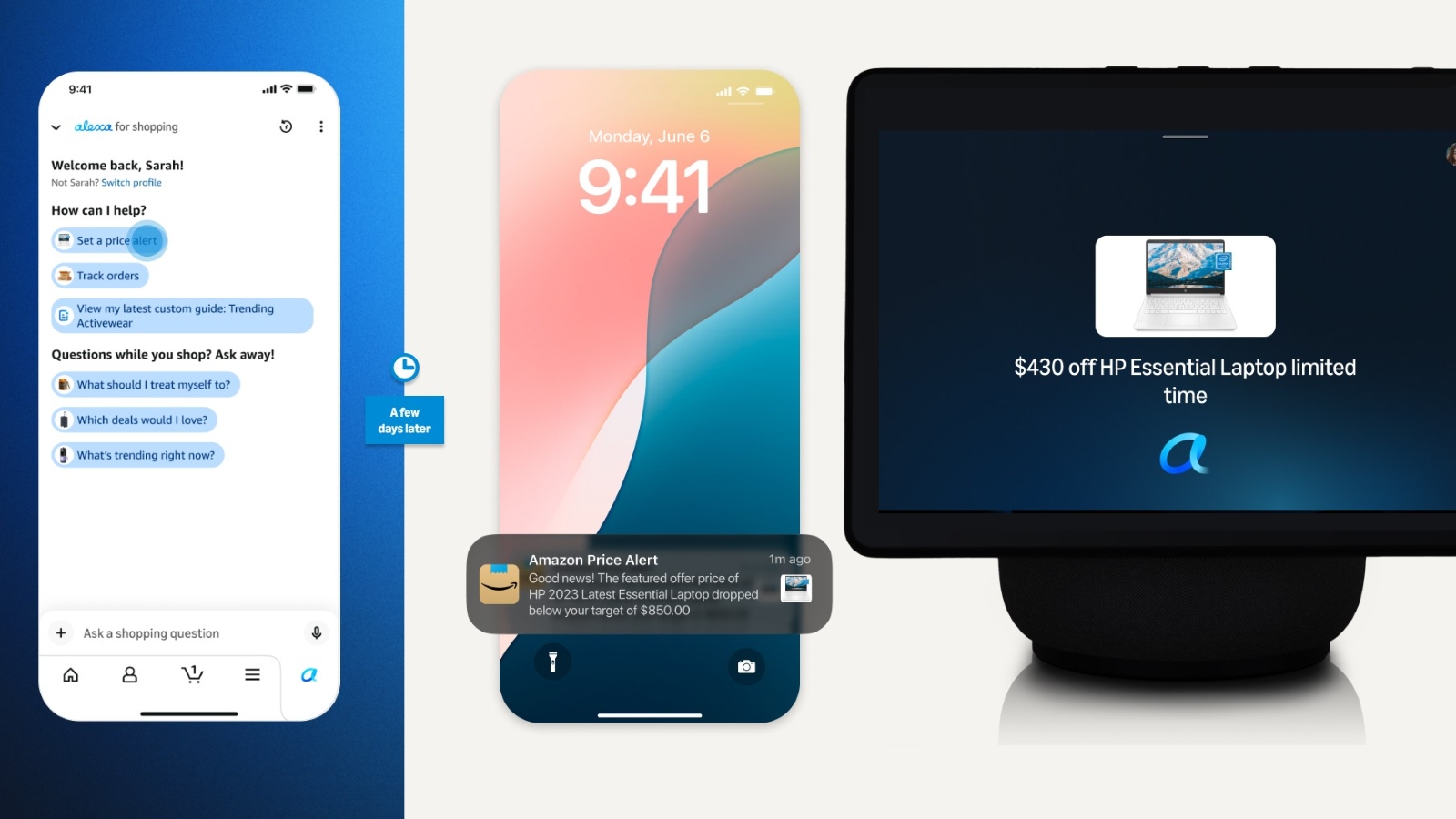
Image: Amazon
Walmart is taking an in-app approach. Ask Sparky has been available in the Walmart app since June 2025, supporting search, review summaries, scenario-based recommendations, and price comparisons, with plans to develop it into a multimodal companion. Walmart says about half of its app users have tried Sparky, and users’ average order value is about 35% higher than that of non-users. Management describes the shift as a move from traditional search to intent-driven shopping. Once Sparky helps build a basket, orders can be fulfilled through delivery, pickup, or an in-store visit, connecting the conversation directly to fulfillment.
Other retailers are building similar entry points:
- Target said in June 2026 that AI-driven traffic in the first quarter had risen about 2,000% year over year, compared with about 400% growth in traffic to its retail website overall. It called itself the first mass retailer to offer shopping experiences across Google—including AI Mode and Gemini—Microsoft Copilot, and OpenAI ChatGPT. The experiences support browsing, adding multiple items to a cart, linking Target Circle, and checkout. Target is also participating in the Universal Commerce Protocol.
- Instacart launched Clementine for Marketplace customers in the United States and Canada in September 2026. It turns conversations, lists, and recipes into carts based on real-time inventory. Early results showed more items per order than in a typical basket and basket values above the company’s approximately $115 average.
- Home Depot expanded Magic Apron in January 2026 with natural-language project advice, in-store product finding, and bills of materials for Pro customers. It has not disclosed a conversion rate.
- Macy’s rolled out Gemini-based Ask Macy’s across its site in March 2026. Bloomberg reported that users spent about 4.75 times as much as non-users.
- Ulta Beauty launched Ulta AI in April 2026 and integrated shopping within Google. Best Buy is rolling out Ask Blue in phases to support decisions about product details, reviews, availability, and prices, with a handoff to a human associate when needed.
Retailers’ own assistants and third-party shopping services still focus on improving experience and conversion within their respective entry points. Meta’s personal AI agent Muse, launched in September 2026, pushes the issue to another level. Muse does more than answer questions: it can open a browser, fill out forms, send emails, book travel, and make online purchases on a user’s behalf. Sensitive actions, including placing an order, require the user’s confirmation. Checkout can use Link by Stripe, with the wallet generating a one-time card to conceal the real card number; support for payment methods such as Shop Pay is also planned. Muse was launched for U.S. users through the Muse app, WhatsApp, and muse.ai, and drew a strong market response.
At Meta Connect two weeks later, on September 23, 2026, the company announced Muse’s first retail connectors. Its official list included Walmart, Best Buy, Gap, Sephora, Ulta, Wayfair, American Eagle Outfitters, DICK’S Sporting Goods, Fanatics, and Michael Kors. Meta also said Muse could access Shopify’s full catalog; Instacart would support grocery replenishment, and Expedia would support travel planning. On October 3, 2026, a Meta spokesperson said shopping had become one of Muse’s biggest drivers of use. In the described flow, a user states a need, Muse browses retail sites, displays options in the app, and can prepare checkout before presenting an approval card for the user to confirm the order. Retailers are therefore building their own Rufus- or Sparky-style interfaces while also being drawn into a cross-retailer agent channel. The battle for the entry point is expanding from on-site search to who helps a customer decide which store to open next.
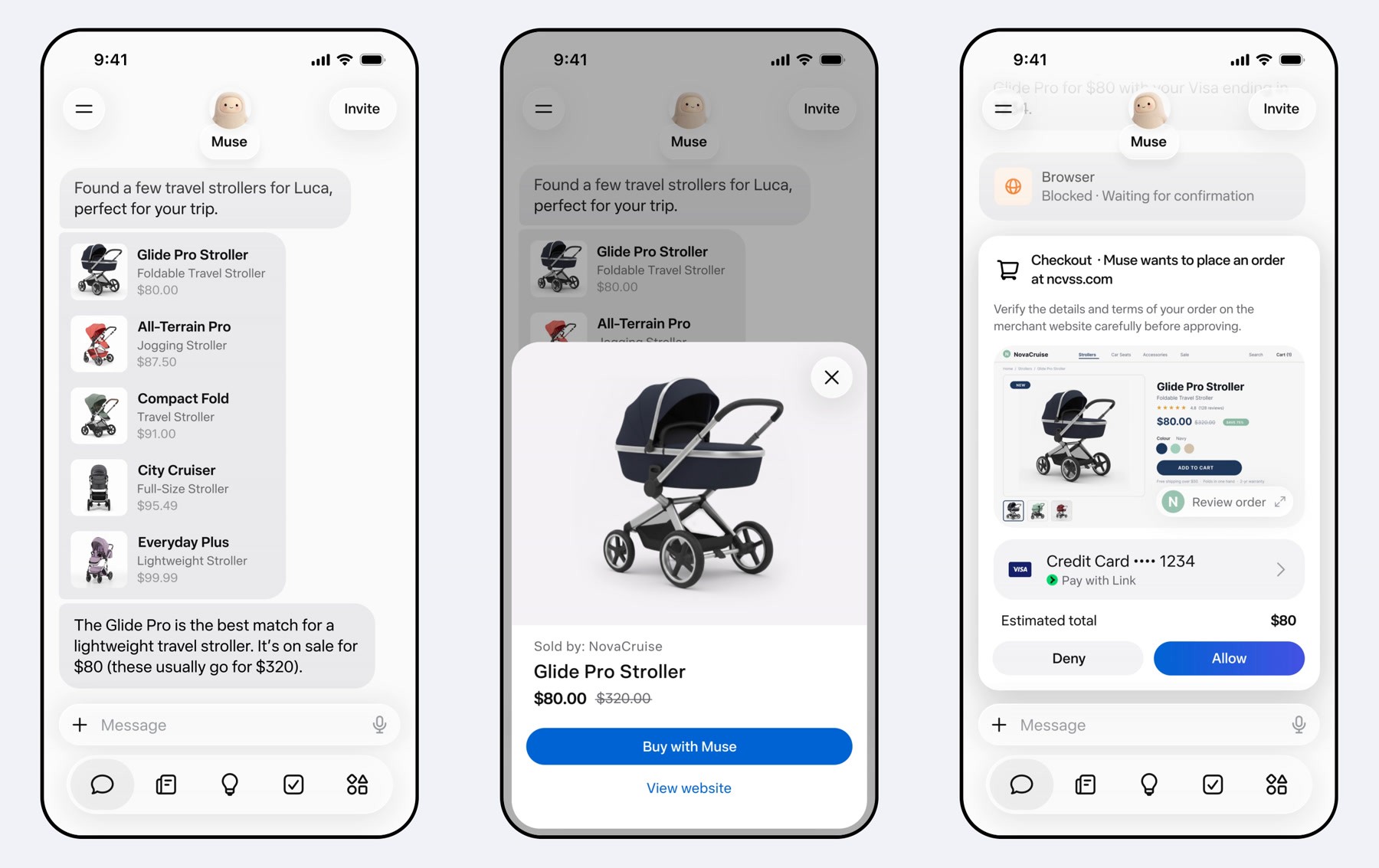
Image: Meta
Muse’s expansion has not been entirely smooth, however. In my own trial, I found that Amazon had blocked Muse from accessing its site, let alone comparing prices or placing an order. Without access to Amazon, users’ confidence in Muse takes a considerable hit.
In short, AI is changing the traditional retail playbook not through a single chatbot or tool, but through the entire process of connecting with customers, capturing the entry point, and shaping decisions. Customers are relying less on keyword searches and more on intent and conversation to build baskets—and even to authorize purchases on their behalf. Retailers are maintaining their own assistants, joining platforms and third-party shopping services, and beginning to face personal agents such as Meta Muse that span multiple retailers. AI is changing how traditional retail competes: the entry point itself has become the new battleground.